
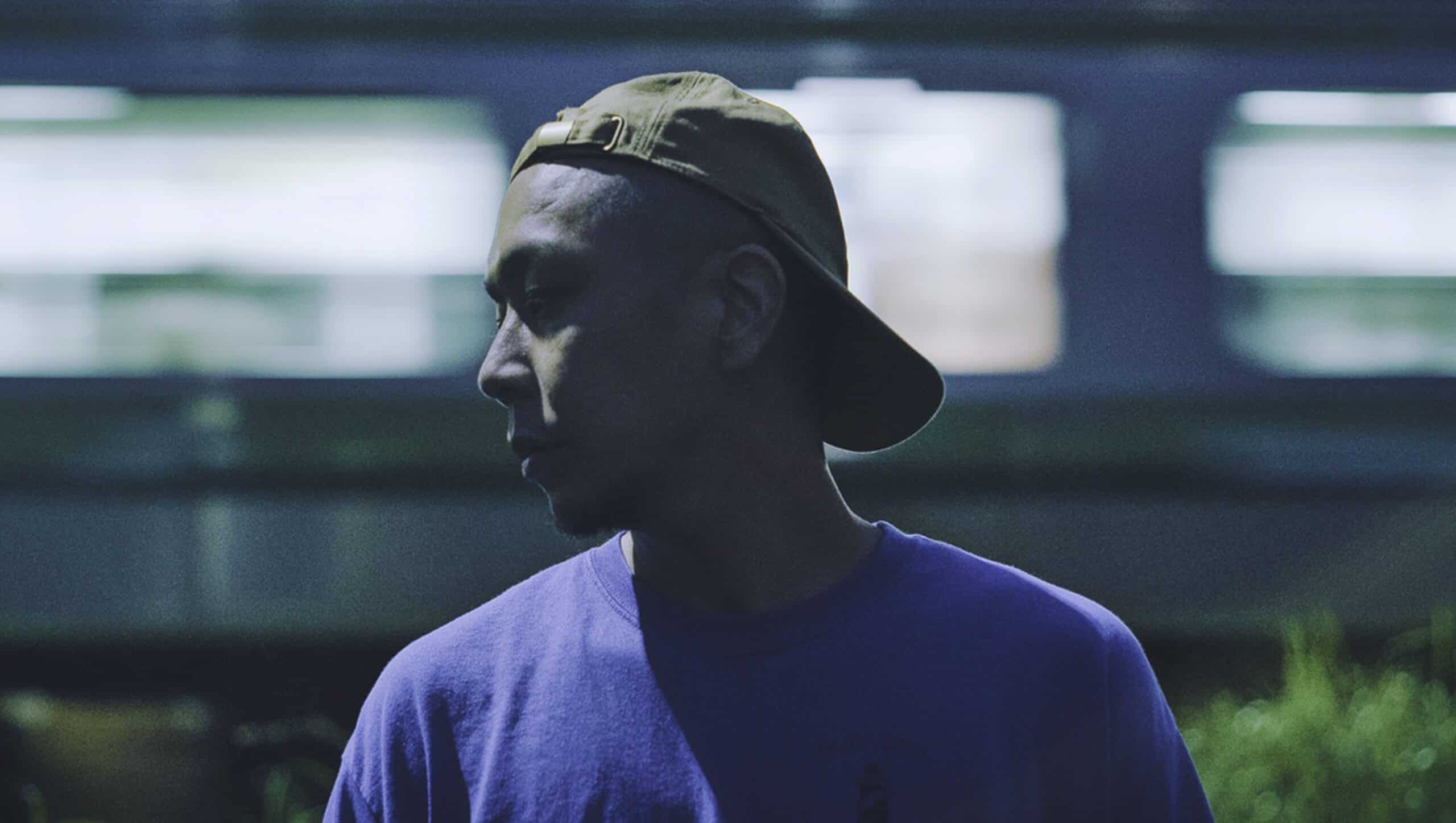
WATT a.k.a. Yotterubutteru is an MC and beatmaker born in Tokyo, raised in Nagano, and now based in Kanagawa. He started out around 2000 with INBU (韻部), a group he formed with fellow MC Kamuri, before going solo in 2009. NORIKIYO, one of Japan’s leading MCs, spotted his talent early on and signed him to Yukichi Records, where WATT released two albums built entirely around his own MPC-driven sampling and a rap style that stays loose and unforced. Since then, he’s worked with artists like BASI, BES, DJ Deckstream, and Cypress Ueno, and contributed music to Red Bull 64 Bars and AbemaTV. In December 2021, he released his third album, “MeguruUta,” his first full-length in six years and a record built entirely around his family. RJHH caught up with him at the start of 2022 to talk through his MPC, his ties to Norikiyo, and what went into his most personal project yet.
Hello WATT a.k.a. Yotterubutteru. Before we start, I wanted to wish you a Happy New Year 2022 and thank you for this interview with RJHH Media. Can you start by introducing yourself to those who don’t know you?
WATT: Nice to meet you, and thank you for having me for this interview. My name is WATT a.k.a. Yotterubutteru, and I currently work as an MC and beatmaker based in Kanagawa Prefecture. I was born in Tokyo and raised in Nagano Prefecture. My alias, Yotterubutteru, roughly means “pretending to be drunk”, but the truth is I can’t really hold my liquor, so I’m usually genuinely drunk (laughs).
How did you discover hip-hop culture, and why did you decide to become a beatmaker/producer and rapper, and under what circumstances?
WATT: Around 2000, a friend named Kamuri, whom I met in high school in Nagano, was already rapping. Listening to his demo tapes, and to the artists he was into at the time, Nas, A Tribe Called Quest, RHYMESTER, King Giddra, that’s how I first really registered hip-hop. I’d probably heard it before, but that was the period when I genuinely fell for it. He influenced me almost immediately, and I started writing my own lyrics and rapping, picking it up by watching him. We eventually formed a group together called INBU (韻部), did live shows, and started producing music. Through that, I gradually became drawn to making my own beats, and in 2003, on a friend’s recommendation, I bought an AKAI MPC2000XL and started building beats on it. I’ve used the same MPC ever since. The hidden track on my first album, “Shikou Hin,” is actually a song with Kamuri, made while looking back on those early days.
I often see an extensive collection of vinyl and CDs behind you in the videos you share on Instagram. Is this collection yours?
WATT: Yes, it’s mine. My room is small, so it might look bigger than it really is. I use it for DJing, sampling, and just listening, so I haven’t been able to let any of it go.
How long does it take you to create a beat? I always feel like you’re looking for the perfect sound.
WATT: Sometimes it takes 20 to 30 minutes, but once I start obsessing over details, it can drag on. When that happens, I get caught up in tiny timing shifts, texture, balance, things like that.
I saw that your first albums were released on Norikiyo’s label, Yukichi Records, and that you even did a full remix of his album “Melancholic Gendai.” Are you still in contact with him? If so, do you have any joint projects planned?
WATT: Norikiyo is someone I owe a lot to. He gave me the opportunity to be heard by a much wider audience. There’s never any flattery or empty politeness in what he says; his opinions are always straightforward, and both his words and his actions have pushed me forward more than once. We’re still in touch from time to time. He even sent his congratulations when my child was born, and he’s always looking out for me in different ways. He still listens to my beats and my work, so the possibility of making something together again isn’t zero.
I remember the tracks “Attraction” with Cypress Ueno and Norikiyo, as well as “Muchin Josya” (無賃乗者) with Yunde, both of which are included on your first album, “Shikou Hin.” Can you tell me more about these two tracks? Do you have any anecdotes about shooting the “Muchin Josya” music video?
WATT: The original version of “Attraction” is “Attraction feat. A-gaill,” from my first album, “Shikou Hin.” I originally made that track with A-gaill, and after Norikiyo heard it, he suggested we turn it into a remix. He’s also the one who suggested bringing in Cypress Ueno, to whom I owe a lot. I think the beat itself dates back to around 2005. “Muchin Josya feat. Yunde” is a song about asking someone to buy you drinks at the club. Back in 2013, Yunde was living in the same building as me, and we made the track just messing around at home. Both the beat and the lyrics came together in a single day. During the video shoot, I drank way too many actual shots of tequila, warm tequila at that, so I genuinely don’t remember most of it. The crew apparently drove me home, and I woke up there, no memory of how I got back (laughs). There’s also a “Muchin Josya (Remix)” featuring HI-KING TAKASE and Meteor, which came out really well, so check that one out too if you get a chance.
Between the albums “Shikou Hin” and “Shiori,” which one do you think is the best project, and why?
“Muchin Josya feat. Yunde.” Both the beat and the rap stay loose, not trying too hard, and I think it pulls off this exact balance: a song that sounds like it might be saying something meaningful on first listen, when it’s really about something completely trivial. Whenever I perform that one live, drinks tend to start appearing onstage (laughs).
What do you think about the current hip-hop scene in Japan?
Compared to when I first started listening to hip-hop, the styles out there have become a lot more diverse. With so many channels to choose from now, I think what really matters is being honest with yourself about what you actually like, and having the focus to go deep on that.
Do you think rappers organizing themselves into groups will replace the original hip-hop scheme of one MC, one DJ?
I’ve worked in a group myself, and I’ve listened to plenty of hip-hop group projects too, so I’ve never really felt locked into thinking the one MC, one DJ format is the only valid one.
“MeguruUta” was released on December 8, 2021. Why did you wait so long to release this project?
WATT: “MeguruUta” is a record I dedicated to my family. After my second album, “Shiori,” came out, my grandparents passed away, I lost someone close to a stupid accident I couldn’t see coming, and on the other side of things, I got married and had a child. These were major events in my life. I wanted this album to process all of that, so figuring out how to put it into words, especially the lyrics, took a lot of time. I was also particular about details in the album’s overall structure and sound that nobody would probably even notice. For example, on the closing track, “Born Again,” I adjusted the song’s length to match my son’s birthday: 3 minutes and 14 seconds. It’s a bit like a wish or a small ritual, but I felt that doing that would let the song’s message, that you can always be reborn, reach my son, too, as something meant for him in the future.
We appreciated the way your production took shape on this new project, “MeguruUta.” Between HI-KING TAKASE, GAPPER, and HUNGER (on “Tsunami,” “Dare,” “Itsukana Futari”), we got the sense of a clear move toward experimental hip-hop.
Thank you! These songs came out of my day-to-day process of just making music steadily, so I’m not entirely conscious of them as “experimental,” but I think I was careful not to let the sound get too polished. I paid attention to keeping the album’s overall tone balanced, so it wouldn’t lean too far in any one direction.
How did you experience the COVID-19 period?
WATT: I avoided going out as much as possible, avoided seeing people, and just made music at home.
What are your plans for 2022? Any releases planned?
WATT: With Covid, it’s still hard to know exactly how things will go, but I’m planning a live tour from February to April, and my first solo headline show in May. I’m also planning to put out my first three albums on vinyl.
Thank you very much for this interview. This is the moment to send a message to the French and international listeners who follow you.
WATT: I’m grateful to Real Japanese Hip Hop media for giving me the chance to get my words out internationally like this. I only speak Japanese, but if listening to my music brings you even a little bit of something positive, that would make me happy.
ALSO IN RJHH
Artists • Bunka • Interviews • News • Videos