September, 2018 | Tokyo, Japan | Interview by ATTANGO
Photographs: ©Aklo— All rights reserved / Original Publication: RJHH MAGAZINE – realjapanesehiphop.com — Sept. 2018
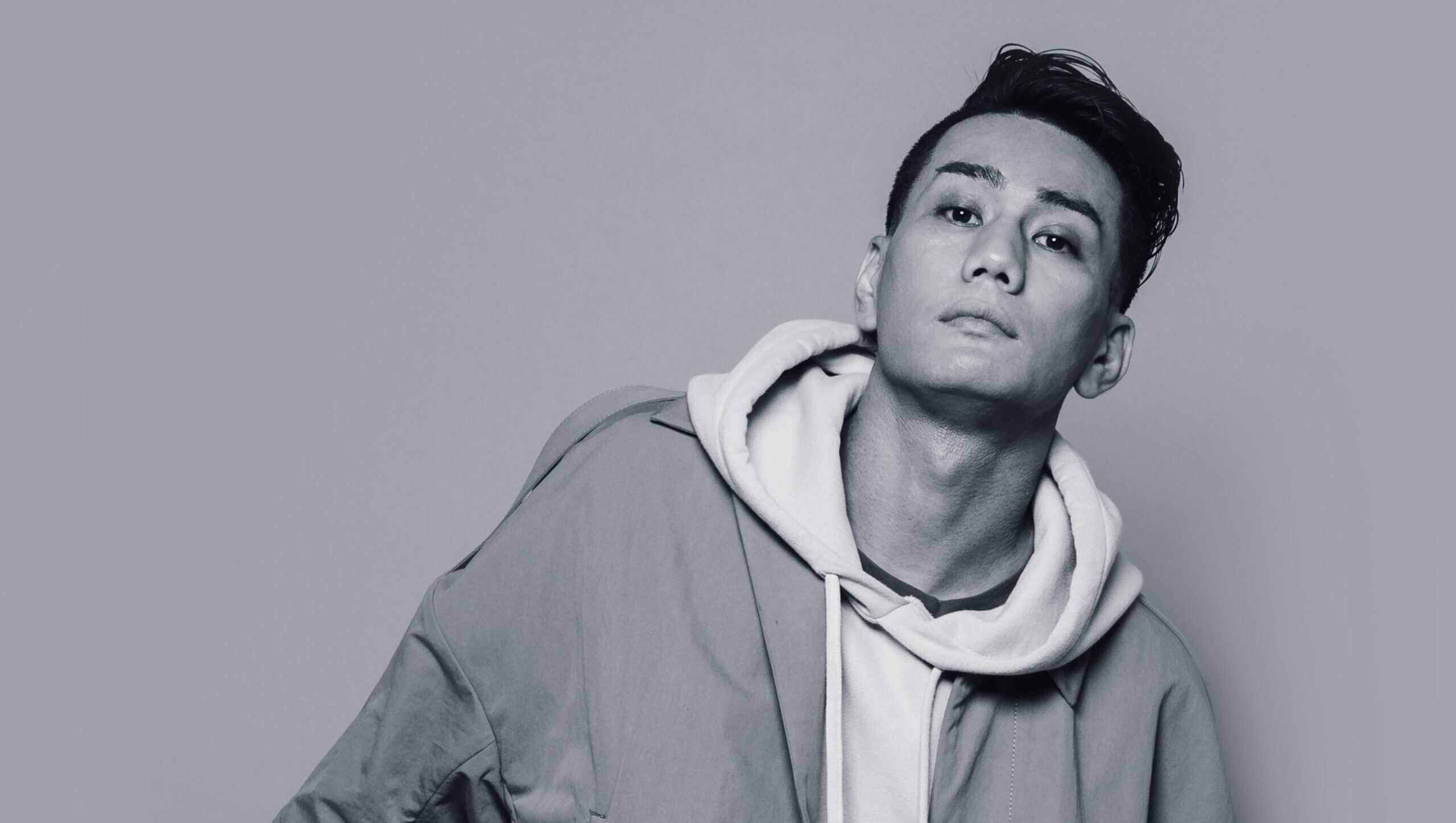
AKLO: Between Two Worlds
The architect of modern Japanese rap speaks candidly about identity, craft, and the unstoppable rise of a scene
Few artists in Japanese hip-hop carry a story quite like AKLO’s. Born to a Mexican father and a Japanese mother, raised in Mexico City until the age of ten before relocating to Japan, he occupies a genuinely singular position in the culture — a bilingual outsider who became one of the scene’s most respected insiders. His discography, from the raw momentum of his early mixtapes to the polished ambition of his studio albums, charts a deliberate artistic evolution that has earned him a devoted following among the country’s most discerning listeners. On a warm afternoon in early autumn 2018, Real Japanese Hip Hop made the short journey from central Tokyo to the quiet residential neighborhood of Hachiman-yama, where AKLO welcomed us at his home. Over the course of a long conversation, he reflected on his origins, landmark records, the viral phenomenon of RGTO, and the broader questions of where Japanese hip-hop stands — and where it might be headed.
RJHH — Thank you for having us at your home in Tokyo. To start from the beginning, can you walk us through your background and how you came to hip-hop?
AKLO — I’m AKLO. I’m mixed — my father is Mexican, and my mother is Japanese. I grew up in Mexico City until I was ten, then moved to Japan. I started listening to hip-hop around fifteen. What really got me was No Limit Records — Master P, the whole Southern sound of that label. I was completely absorbed by it.
I began writing lyrics in English first, since that was the language the music came from for me. But when I started doing shows, a fan said to me, ‘I want to know what you’re actually saying.’ That stuck with me. Rapping in Japanese had genuinely never crossed my mind, but the request made me think — why not try it? The first Japanese-language track I did was never released, but the crowd responded to it at shows, so I kept digging deeper.
By around eighteen, I was fully committed to rapping in Japanese, meeting other artists, and building stage experience. My style back then was quite experimental, pretty underground. I started working with DJ Clock, who was doing world tours at the time, and a show we did together in New York was something of a turning point. Seeing an audience react to music with that kind of energy — that mainstream power — made me ask myself: if I’m serious about this, I shouldn’t be afraid to change my approach. I want to make music that audiences can truly connect with. That became the mission.
“Rapping in Japanese had genuinely never crossed my mind — but the crowd responded, so I kept digging deeper.”
AKLO — Three mixtapes followed, each one received better than the last. The third, in particular, opened doors. I met Simon, contributed to his album Download, then connected with producer GEEK, which led me to Bachlogic. Eventually, Jig, Bachlogic, Salu, and I launched One Year World Music together.
RJHH: How did The Package and The Arrival come together? Walk us through that creative process.
AKLO — Jig was the first great producer I worked with closely, and he introduced me to Bachlogic. The three of us gathered in the studio and built The Package together. From that partnership, One Year World Music — the label with Jig, Bachlogic, Salu, and me — was born.
During The Arrival, I could sense the audience was ready for something different alongside the harder hip-hop. SALU felt like exactly the right artist for that shift — he was already involved through Bachlogic and Jig. My producers at the time were a little frustrated, honestly. They wanted to pursue a more classically rugged hip-hop sound — tracks in the vein of Bachlogic’s ‘Chaser.’ But we stayed together and worked through it.
RJHH: “RGTO” from The Arrival has now accumulated over ten million views on YouTube. How did that track come together with SALU and K Dub Shine?
AKLO — RGTO is special to me on a personal level. Riding the momentum from The Package, I started The Arrival with real energy — and RGTO was the very first song we made. It was originally a solo track. But when I explained the concept to SALU and K Dub Shine, I knew I wanted them on it specifically. I wanted something that would spark a debate about the conventions of hip-hop — the best verses, the sharpest flows, presented in the most compelling way possible.
RJHH: The video features posters of KRS-One, Snoop Dogg, N.W.A, Dr. Dre, Public Enemy, Rakim, Krush Groove, J Dilla, Big Pun. That’s quite a deliberate curatorial choice.
AKLO — When I described the concept to the director, I used the phrase ‘try out.’ He didn’t quite grasp what I meant, so I told him afterward — it was essentially a test. His suggestion of setting it in a high school ended up taking over the concept, which wasn’t my original vision, but the result was genuinely great.
What made the clip work were the details — the posters, the American rap books, the school uniforms. Most of those props were the director’s own belongings, so sourcing them wasn’t difficult. I also reached out to T-PABLOW and YZERR because I needed students who felt real and who already had credibility. They couldn’t appear in the end, but they introduced me to other young rappers. We kept searching for more faces — and that search brought in VINGO, and ultimately connected all the dots that became BAD HOP as a group. Having so many compelling artists visible in a single clip was part of what kept people watching and rewatching.
“That search brought in VINGO — and ultimately connected all the dots that became BAD HOP as a group.”
RJHH: Is RGTO 2 something you’ve discussed?
AKLO — K Dub Shine has actually brought it up. The challenge right now is scheduling — it would require coordinating several people’s calendars, and that’s genuinely difficult. Nothing ruled out, but nothing imminent either.
RJHH: Your collaboration with SALU on “We Go On” from Outside the Frame was warmly received. How would you describe your relationship?
AKLO — SALU and I go back a while. We’ve recorded together on a number of tracks. Being on the same label — One Year World Music — and being the only two rappers in that setup meant we naturally gravitated toward each other. There’s a real ease to working with him.
RJHH: You’ve been prolific with releases — Sorry Come Back Later with Jay’Ed, the Mixtapas project. How do those fit into your broader output?
AKLO — Sorry Come Back Later was a mini-album with Jay’Ed, a vocalist I’d known from a previous collaboration he invited me into. Mixtapas is my most recent project — and it was a free download, incidentally. Did you know that?
RJHH: Yes, I downloaded it when it was available. On Sorry Come Back Later, the video for “Different Man” is packed with cassette tapes, VHS tapes, a Super Nintendo, a CRT television — all very deliberate nineties iconography. What was the intention?
AKLO — We wanted a genuine nineties atmosphere — not just an aesthetic gesture but the actual texture of the era. The title itself comes from the theme song of a Japanese television drama, a horror show that began each episode with an old videotape related to a ghost. We incorporated that VHS-into-the-deck moment as an intro. We were serious about using real props from the period, not replicas. It took work, but the authenticity of the final clip justified it.
RJHH: “Different Man,” alongside “RGTO,” “Red Pill,” and the “Heat Over Here” remix, is the track that circulates most widely in France. All Bachlogic productions.
AKLO — That’s genuinely news to me — I didn’t know those particular songs had found an audience in France. They’re all Bachlogic productions, and they’re tracks I’m proud of.
RJHH: Your ATOZ tour with Zorn has recently concluded. You two have collaborated frequently — what was the experience like?
AKLO — The Tokyo date was the final stop. We’d originally planned to wrap up before that, but we added five shows. It was a good run.
RJHH: How do you see the new generation of Japanese hip-hop artists — the BAD HOP and SUSHIBOYS generation?
AKLO — BAD HOP, SUSHIBOYS, JIN DOGG — that generation works heavily with trap, and I think it functions well in Japanese hands. I’m supportive. Their rap sounds effortless on the surface, but the craft underneath is real. When I’ve been in the studio with people from BAD HOP, they arrive with fresh ideas, but also with meticulous attention to how flows are structured and layered. Hip-hop isn’t just about writing — it’s about wrestling with the complexity of flow, and they take that seriously.
RJHH: If you had to name five standout MCs from that new generation, who would you choose?
AKLO — JIN DOGG, BAD HOP, WILYWNKA — and from Anarchy’s label, Leon Fanourakis and 1%.
“Whatever we build outward, I want us to preserve what makes Japanese hip-hop distinctly itself.”
RJHH: We ask many artists this: What’s your perspective on the rap battle circuit that has grown so significantly across Japan?
AKLO — Japan’s hip-hop scene has its own particular character, and the battle culture is part of that. I see it positively. You’re essentially thrown into a colosseum unarmed — you survive on skill alone. Winning a battle elevates your profile almost automatically. It serves a real function. I respect it.
RJHH: Japanese hip-hop remains largely underground internationally, and some in the younger generation are eager to reach overseas audiences. What’s your take on that ambition?
AKLO — It’s a layered question. Unlike many other Asian markets, Japan has a domestic audience substantial enough to sustain a full career — both in live performance and in record sales — since the physical format remains remarkably strong here compared to predominantly digital markets abroad. Japanese artists can stay in Japan, make music for Japanese listeners, and build meaningful careers doing exactly that. Korean and Thai artists collaborate with Japanese artists — the connection flows both ways.
Japan is an island nation, and that has shaped a culture that turns inward to refine quality. That insularity can also be a creative strength — you’re accountable entirely to your own audience. The internet has created more opportunities to connect with artists internationally, and perhaps it is time for Japanese artists to explore those collaborations more deliberately, to expand their reach. Whether that’s straightforward or complicated, I honestly don’t know. What I do know is that whatever we build outward, I want us to preserve what makes Japanese hip-hop distinctly itself — we’ve been developing it for decades.
Interview by ATTANGO