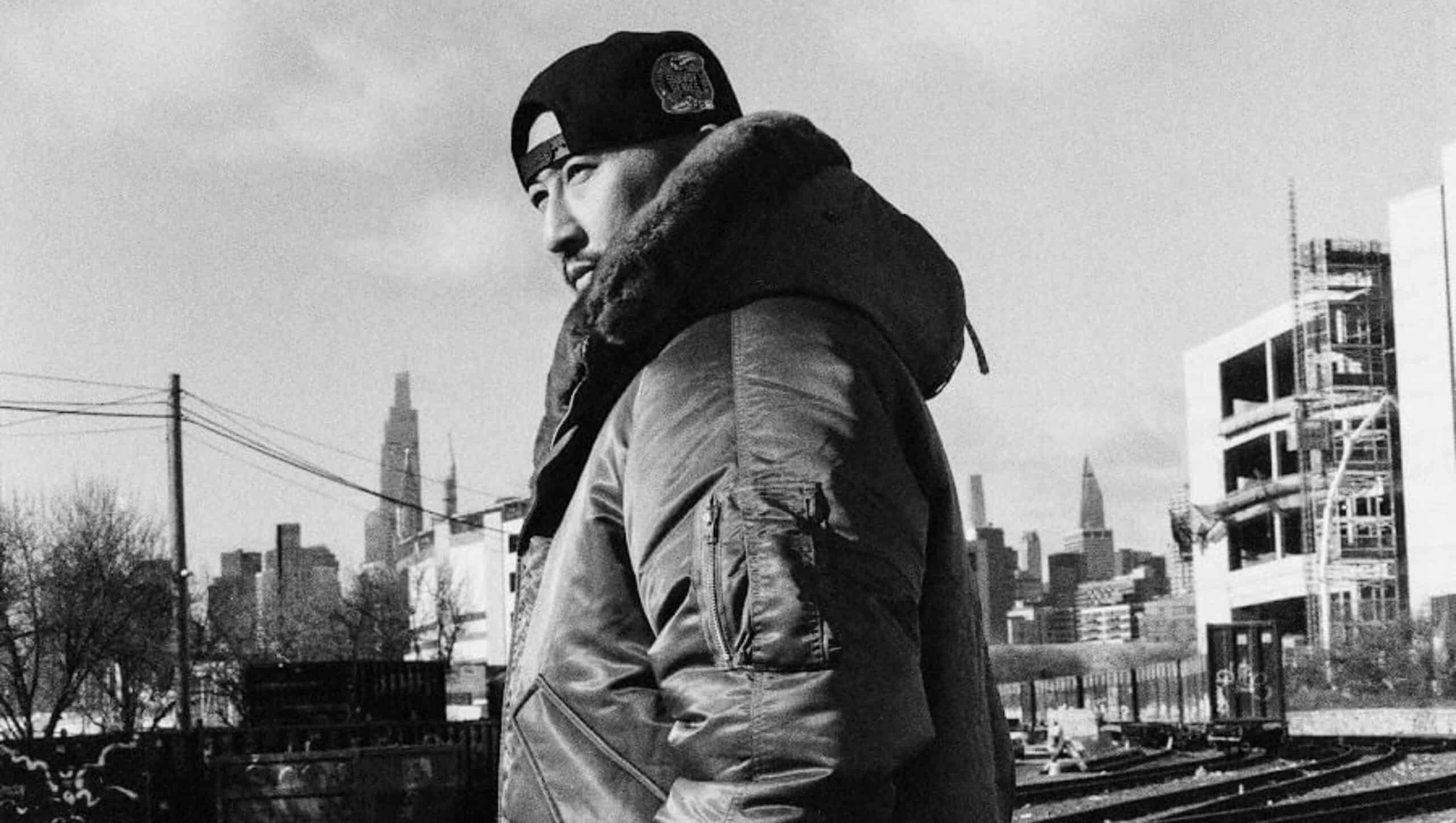
DJ Ryow has spent twenty years on the Japanese hip-hop scene, working with artists across every generation. Peers now treat him as an essential name in production, equally at home behind the turntables, the beat machine, or the mixing desk. He grew up in Gifu and got hooked on hip-hop in the 90s. He’s played major festivals in Japan and abroad, and his productions back up the reputation. Last August, DJ Ryow returned to the studio and started dropping videos to announce his eleventh project, DREAMS AND NIGHTMARES. The album came out last week. Real Japanese Hip Hop sat down with him to talk through a career that shaped a generation of Japanese hip-hop.
Hello, DJ Ryow. I’ve seen several Japanese rap sites describe you as a DJ, a beatmaker, and a producer. Of those three titles, which one fits you best?
DJ Ryow: All of them!!! (laughs). To me, each role is different, but I feel like I’m a mix of all three.
In the early 90s, ECD, King Giddra, Scha Dara Parr, Rhymester, BUDDHA BRAND, DJ KRUSH, SHAKKAZOMBIE, SOUL SCREAM, and other groups laid the foundations of Japanese rap. Were you following these artists, or was your attention more on American hip-hop at the time?
DJ Ryow: I’m from Nagoya, and back then I was mainly listening to ILLMARIACHI.
My favorite Japanese rap albums from that era are 5 Wheel 2 The Coast by SDP (Scha Dara Parr) and Don’t Turn Off Your Light by Microphone Pager. Can you name a few of your favorite albums from that period?
DJ Ryow: I’d say THE MASTA BLUSTA by ILLMARIACHI, that was my favorite album. That’s where it started for me. From there, I got into DJing and listened to a lot of tracks from both Japan and the US.
Do you remember what you were doing in 1994?
DJ Ryow: I was 14, and I played football.
“Honestly, I don’t care about age. People with charisma and authenticity are always cool, no matter how old they are. And even though I’m older, the energy of these young artists is impressive. I think it would be great if we could connect the generations more.”
Does your career really start in 2005 with the release of Project Dreams? I’m wondering if you’d already started producing before that year. Can you tell me how it all began?
DJ Ryow: My first album was “Project Dreams,” released in 2005. Before that, I’d already produced various tracks on releases like “ENDLESS FILE” (demo), “EQUAL, RYOW,” “B-NINJAH & AK-69 / GHETTO CHAMP,” and “MOSAD.” Between 17 and 18, I started DJing in Ogaki as a hobby. After that, I left my parents’ house at 18 and moved in with a friend in Nagoya. That’s when I met “E”qual and the other members of the group, MOSAD, Tokona X, and Akira. That’s when I joined them. That’s really where my music career started.
The word “dream” comes up constantly in your work: Project Dreams, In Dreams We Trust, and even in the name of the label you founded, DREAM TEAM MUSIC. Why does this word matter so much to you?
DJ Ryow: The main reason is that I’m always dreaming, no matter my age. I’ll be turning 40 next year (laughs).
What was your first trip to the United States like? You even met DJ Green Lantern, DJ Mister Cee, and DJ Envy. How did those connections happen?
DJ Ryow: My first time in New York was a shock. I think it was a real stroke of luck for me to get to that city. Since I kept going back, I wanted to keep building things there: mixtapes with other DJs I admired at the time. I gradually got closer to Mister Cee, Envy, Green Lantern, and Absolute. I also collaborated with Flex and New Era. New York is my favorite city. I go back regularly because that megacity is endlessly inspiring. There’s one memory that stays with me from my first trip. I scattered the ashes of a member of the group BALLERS from a hotel window into the snow. His name was Keishi, and he’d always dreamed of going to New York. He died young.
Who is TOMOKIYO? I noticed he was heavily involved in the Project Dreams series, which wrapped up in 2009.
DJ Ryow: We worked together for the first time in the summer of 2005. “The Rock City,” with “E”qual, was our first joint production. After that, we went straight into producing the album “PROJECT DREAMS PT.2.”
Before we get to NEW X CLASSIC, I want to go back to More Than Music, Life Goes On, and In Dreams We Trust. All of Japanese rap’s major names show up on those records. Finding the right beat for each artist can’t be simple. How do you manage to work with so many different artists and adapt to each of their styles?
DJ Ryow: I don’t really feel the difficulty of working with that many artists. If anything, I have a blast because I bring on every artist I bring on board as a fan first.
When you’re putting together a new album project, do the artists reach out to you, or do you produce the instrumentals first and then call them?
DJ Ryow: For me, it starts with the beat. I always have a stockpile of beats on hand, since I’m producing constantly. Lately, I’ve even been producing with the members of SPACE DUST CLUB. How I approach artists really depends on the situation. But when I come across artists who inspire me, whether through their music, meeting them at events, or seeing them live, I don’t hesitate to reach out with a proposal. From there, I need to figure out how we can work together around their schedule. I have to find the right timing for production and release.
TOKONA-X is an artist you often pay tribute to on your albums. Can you tell us what kind of rapper he was?
DJ Ryow: TOKONA-X was the strongest, wildest hip-hop artist out there.
Can you tell me about NEW X CLASSIC, released last year?
My approach to production wasn’t all that different from my other albums. But since it was my tenth, I was really fired up, and I considered it my last project. Then my eleventh album came out (laughs).
I also noticed that on this album, you worked more with younger rappers who represent today’s Japanese hip-hop scene: Bad Hop (Y-zerr, Vingo, T-Pablow), MIYACHI, JP THE WAVY, Cz Tiger. What stood out to you while working with these younger artists?
DJ Ryow: Honestly, I don’t care about age. People with charisma and authenticity are always cool, no matter how old they are. And even though I’m older, the energy of these young artists is impressive. I think it would be great if we could connect the generations more. I just hope that connection keeps growing.
DREAMS AND NIGHTMARES has been out since October 2. Can you give us some details about your new album?
DJ Ryow: A lot of the songs have already been released, but I’d be glad if people listened to the whole thing: the artwork, the track order, all of it. Thanks to the inspiration behind it, it turned into what I’d call my “best work yet.” I also put out a music video for every track on the album, so check those out!
Thank you, DJ Ryow, for this interview. Any final words, dedications, or messages for your fans?
DJ Ryow: Thank you, RJHH. It was a real pleasure answering your questions. I’ll be turning 40 next year. There’s a lot packed into the work of a DJ and producer. So go listen to the music and step into the scene. Thank you!!!
ALSO IN RJHH
Artists • Bunka • Interviews • News • Videos