December, 2024 | Tokyo, Japan | Interview by ATTANGO
Photographs: ©ATTANGO, RJHH — All rights reserved / Original Publication: RJHH MAGAZINE – realjapanesehiphop.com — June. 2025
Listen to and follow HAIIRO DE ROSSI on Spotify – YouTube – Instagram
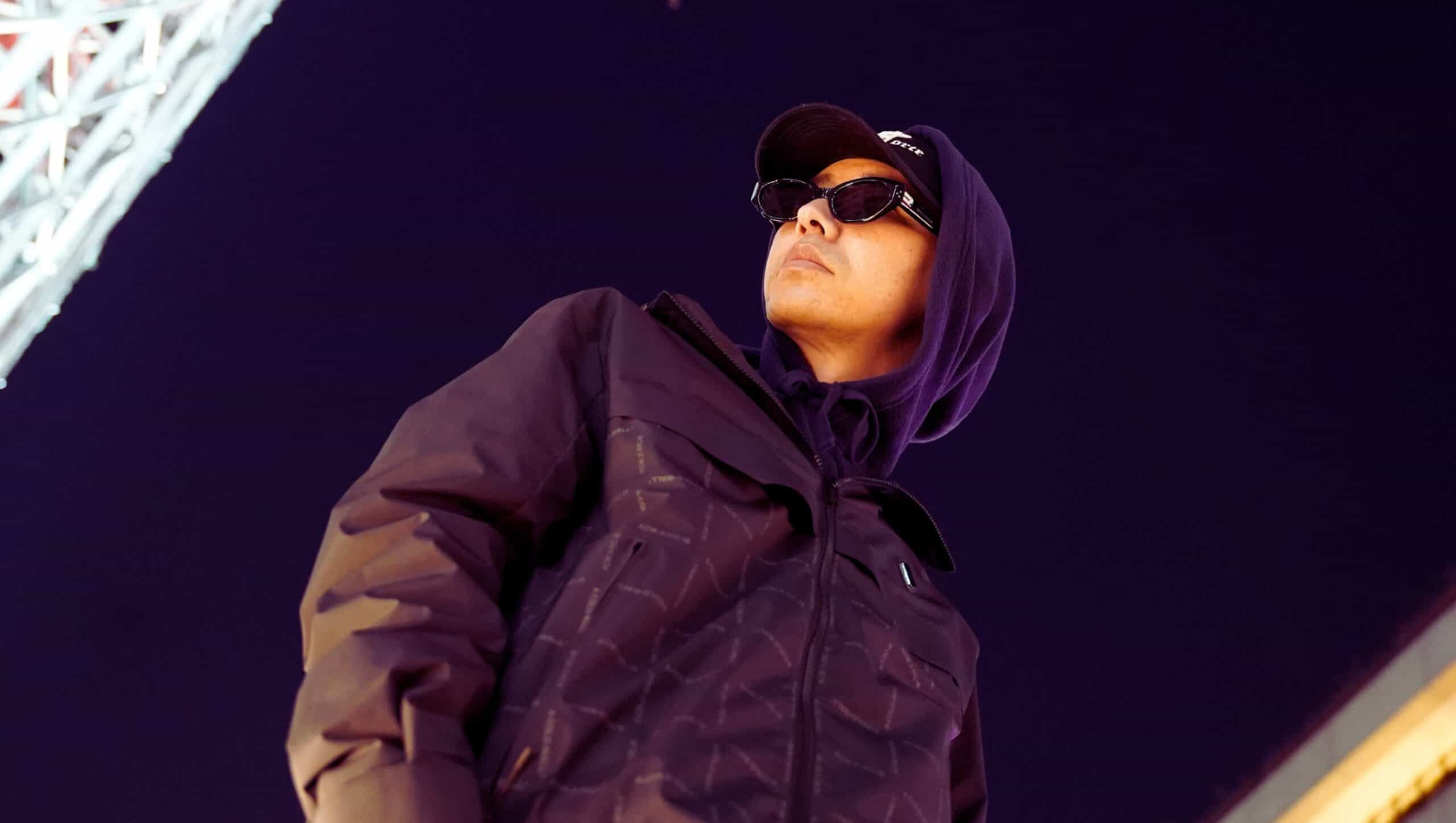
Haiiro De Rossi produces his own beats, runs his label Forte, and has been releasing records on his own terms since 2008. In a scene where independent careers rarely last that long, he’s still at it. We spoke with him about his catalogue, his collaborators, and what Alternative represents.
Haiiro De Rossi is a rapper, producer, and label founder born and raised in Shonan, a coastal city in Kanagawa Prefecture, Japan. He debuted in 2008 with the album True Blues and has since built an acclaimed discography rooted in jazz, hip-hop, and conscious rap. As the founder of independent label Forte, he has remained one of Japan’s most respected underground artists for over 15 years.
For readers who don’t know you yet — who are you, and what do you do?
Haiiro De Rossi: I’m Haiiro De Rossi, a rapper born and raised in Shonan, a coastal city in Kanagawa Prefecture, Japan. I also run an independent label called Forte.
You’ve been at this since 2008. How did you get started, and what has kept you going?
Haiiro De Rossi: First of all, I maintain a certain distance from the Japanese hip-hop industry. It’s a complex position that can’t be summed up as simply positive or negative. I also see “Japanese rap” and “Japanese hip-hop” as two slightly distinct entities. Except for a brief moment, I’ve never truly been part of the mainstream. I was inspired by artists like Mos Def (Yasiin Bey), Common, Talib Kweli, The Roots, and Erykah Badu — primarily from the Soulquarians collective. These are artists who, while being outsiders to the mainstream scene, remain deeply authentic in their art and culture. That respect and authenticity have always been my guiding principles. That hasn’t changed to this day. Currently, rap has become a genuine trend in Japan, almost like a bubble. While I’m happy to see this prosperity, too much emphasis on materialism risks making us lose sight of what truly matters. I don’t want to conform to that trend.
“I also see ‘Japanese rap’ and ‘Japanese hip-hop’ as two slightly distinct entities. Except for a brief moment, I’ve never truly been part of the mainstream.”
You produce, rap, and run Forte. What does managing other artists actually involve day-to-day?
Haiiro De Rossi: I try to treat Forte not as a business, but as a spirit. If it were only a business, there would be moments where profit would come before an artist’s intentions, especially in large projects. However, after years of doing this, I feel fortunate to be surrounded by incredible members, including the artists around Forte. I always prioritize their intentions — if they want to undertake a project, we do it; otherwise, we abstain. Money can be recovered later, but trust and credibility are hard to regain once lost. I also make sure to offer simple emotional support, like naturally asking close friends: “How are you doing? Is everything okay?” That’s a natural thing to do if you care about someone. The most gratifying moment is when artists voluntarily represent Forte with pride.
Which of your albums means the most to you?
Haiiro De Rossi: Albums like Forte, Haiiro De Rossi, Hallelujah, and Alternative (Expanded Edition) are close to my heart. Forte marked an unexpected transformation for me — I still meet fans who discovered me through that album. Although I’ve grown and changed with age and career, I’m happy to have captured that essence at the time. The release of Alternative (Expanded Edition) in 2024 evokes a similar feeling. Among individual tracks, Forever (Hallelujah) and Watching Over You hold a special place, as they are appreciated by many and carry deep meaning for me.
Your album Forte, released in 2011, made a significant impression — notably with the track “HONEY”, featuring Grace. Tell me about that collaboration and what this work represents to you.
Haiiro De Rossi: HONEY depicts an ideal, relaxed yet sensual day spent with a partner. It’s the kind of track you want to listen to again and again. Sharing a chai tea while listening to D’Angelo’s Voodoo at a hotel — wouldn’t that be perfect? It’s not just about that track, but more generally, I’ve noticed that my music pairs well with female voices. Of course, it’s not just any singer — it’s their passion that makes a collaboration shine. The women I work with share a devotion to growth, immense integrity, and a unique ability to breathe soul into a track. I’m grateful to have had so many opportunities to collaborate with such incredible singers.
“Rappelle-Toi” has a strong jazz influence woven into its rap, especially on tracks like “Rockstar” and “Lifeline”. How would you describe that album, and what did you want to convey through its melodies?
Haiiro De Rossi: That album was created during one of my darkest periods, almost as a form of rehabilitation. It also marked the beginning of my serious collaboration with Pigeondust, who mainly handles my music production. It’s a very introspective work — without excessive polish, but one that beautifully captures an era when I was struggling to emerge from the darkness. As I continue to evolve, the meaning of that album keeps growing.
You have often collaborated with R&B singers like Grace, CHIYORI, Izumi Makura, and NENE. What importance do you place on including female voices in your productions? What do they bring to your music?
Haiiro De Rossi: As I mentioned earlier, it’s clear that female singers or rappers blend well with my style. They possess a unique characteristic — you could call it their “flavor,” for simplicity. On the other hand, in my daily life, I prioritize my family, but when I create a song, whether writing or singing, I always put the music and my female collaborators first. It’s a bit like accompanying an actress on the red carpet at a film festival. I always ask myself: how can I make her shine the best? How can we, together, create a song that genuinely matters to each of us? I think about this constantly. Because after working with me, these artists continue their careers, just as I continue mine. That’s why I always want to create something as exceptional as possible.
“For me, hip-hop remains first and foremost a creation of African Americans. Sharing is important, but learning is even more so.”
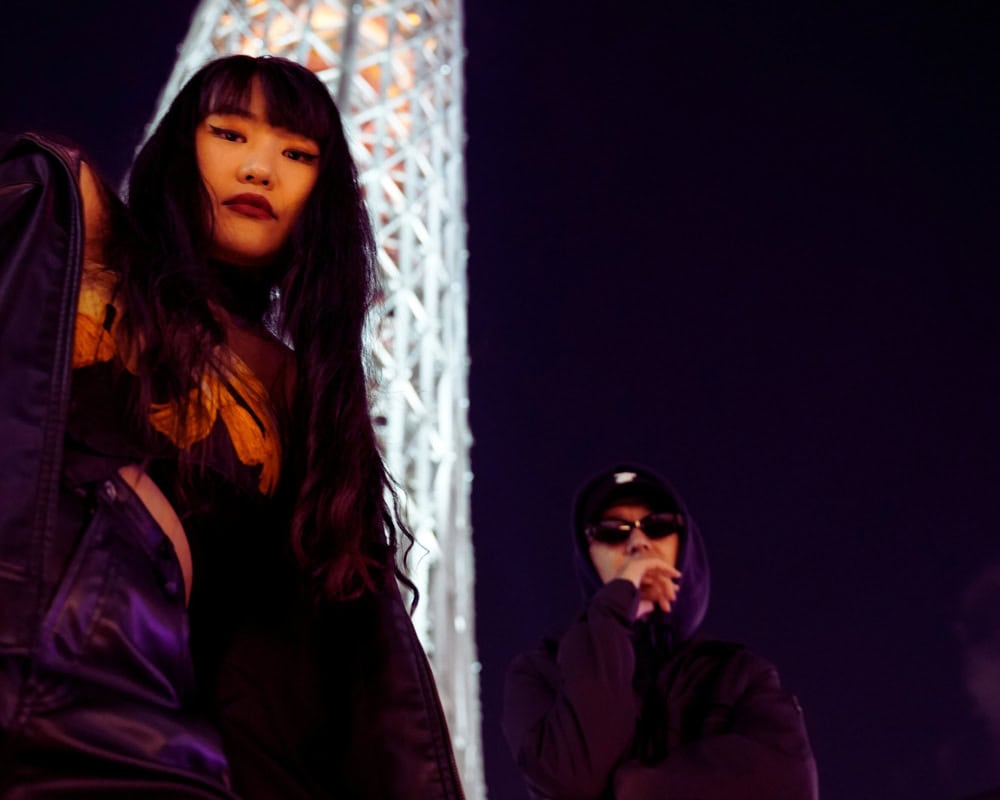
HAIIRO DE ROSSI with singer NENE in Tokyo, December 2024 – Photo by ATTANGO
Alternative came out August 14th. What does the title mean to you, and what were you trying to do with the record?
Haiiro De Rossi: As I said at the beginning, I’m not a mainstream artist. I don’t reject mainstream artists, but I sense a difference between what they value — including philosophically — and what is essential to me. I believe it’s my duty to present my soul and philosophy to the world through my music. If I don’t join an existing mainstream, I can create a new one, even on a small scale. Simply remaining a spectator is not an option. That’s why I wanted a title with a strong presence. In that sense, in terms of positioning, Alternative seemed perfectly fitting. The album’s sound is alternative, but above all, it’s my own existence that embodies this idea of being alternative. Regarding the project, the song “Watching Over You” conveys the most universal message to me. I’m enormously influenced, of course, by hip-hop artists, but also by jazz and rock musicians. As for Japanese artists, it’s perhaps the rock artists who have marked me the most. I had never really spoken about it, but it was interesting that a person who listened to the album told me they felt “the spirit of rock” in it. That song will be published in a different version next year, because I want to sing it for a long time.
You’ve been watching the scene since 2008. What has actually changed?
Haiiro De Rossi: I find it great that Japanese hip-hop is being put in the spotlight. However, I think it’s still a bit early for artists to adopt a Japanese hip-hop-specific attitude. We don’t yet know whether this trend will take root as a genuine culture, nor how many people will remain once the excitement fades. For me, hip-hop remains first and foremost a creation of African Americans, and their art continues to teach us important lessons in our lives today. Sharing is important, but learning is even more so. That’s why I will always be a student of music and hip-hop, and that will never change. I won’t stop those who wish to offer their own interpretations, but I hope they will never forget to respect this culture. Even if Eminem became the best-selling rapper in the world, he wears T-shirts of rap legends when he takes the stage, and he never stops showing that he is a guest in this culture. That’s probably the reason he has remained so respected for so long.
We turned 10 in 2024. Anything you’d like to say to the readers?
Haiiro De Rossi: The real truth, at its core, is knowing what is true for yourself. If you need to ask others for confirmation, it means you lack confidence in yourself. By remaining true to your truth, you will eventually meet allies and fellow fighters, even if it takes time. And some people — even if few — will be able to feel that. I hope that Real Japanese Hip Hop continues to transmit these truths and that they reach a wide audience. Congratulations on ten years.
Haiiro De Rossi & NENE: In My Feeling | With You
Through his two singles With You and In My Feeling, Haiiro De Rossi invites us on a musical odyssey where rap blends with the velvety textures of R&B, Soul, and New Jack Swing. This refined alchemy reveals the artistic complicity binding the two performers. Long-time collaborator and producer Pigeondust orchestrates two remarkably organic sonic ecosystems, on which the passionate timbres of both artists intertwine with striking fluidity.
Propelled into the spotlight in 2024, NENE has since released an exceptional string of singles at an impressive pace. In this pivotal year, she unveiled a series of major compositions that fully revealed the breadth of her artistic range — including COMMON GROUND, DROWN IN MY KARMA, and Sunshine. Versatile in her approach, NENE demonstrates consummate mastery in both solo performances and collaboration, particularly in rap features, where her presence transcends mere accompaniment to forge a true artistic exchange with her partners.