
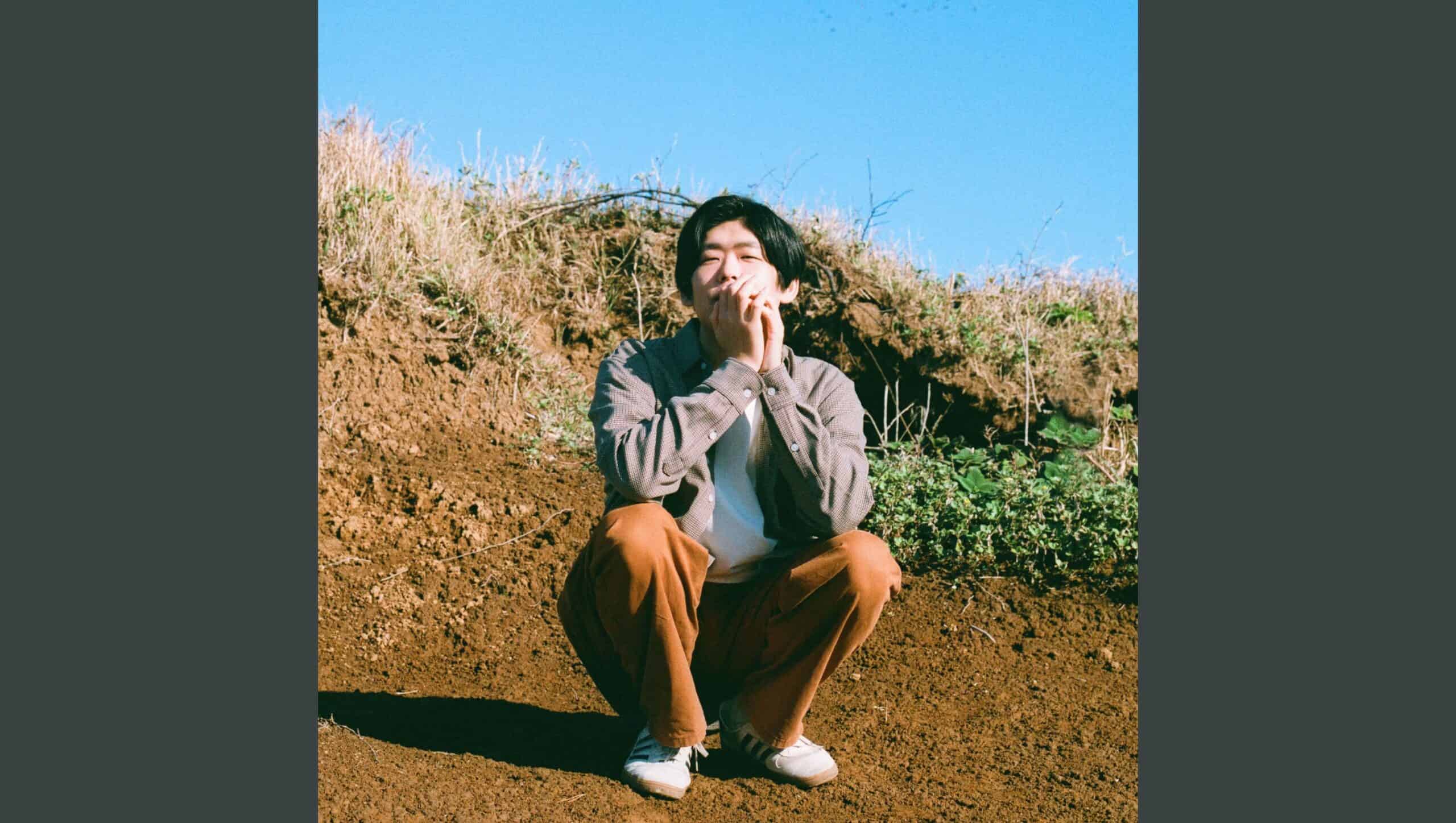
July 21, 2019 | Tokyo, Japan | Interview by ATTANGO
STUTS was born in Nagoya in 1989. He taught himself to produce in a Kagoshima dormitory that banned computers but allowed an MPC1000. His debut Pushin’ came out in 2017; EUTOPIA followed in 2018 and drew attention from outside Japan. It was in that constrained, almost monastic space that a teenager obsessed with hip-hop learned to sculpt beats with the patience of a craftsman. The road since then has been remarkable. From the streets of Harlem, where he electrified passers-by with his MPC in 2013, to packed venues across Japan alongside superstar Gen Hoshino, STUTS has carved out a singular path — driven not by trends, but by an unwavering artistic standard. His influences are worn openly — Pete Rock, DJ Premier, DJ Shadow, A Tribe Called Quest — yet his voice is resolutely his own.
In 2018, Eutopia marked a decisive turning point: built from scratch and conceived as a cohesive whole rather than a collection of loosely connected works, the album revealed an artist in full command of his craft, whose music needs no translation to land. It is in that context that we had the privilege of sitting down with him — a rare conversation, somewhere between reticence and generosity, about his roots, his influences, and his relationship with the wider world.
STUTS — what’s been going on since EUTOPIA came out?
STUTS: I’m doing great! The first three months of 2019 were spent on the road with Hoshino Gen’s tour. Since wrapping that up, live performances have kept me busy, and in parallel, I’ve been writing new material and taking on various commissioned production work. Weekdays in the studio, weekends on stage somewhere new — that’s pretty much my rhythm right now.
Where did you grow up, and how did music become the thing you did seriously?
STUTS: I was born in Nagoya, but from middle school, I left home to live in a dormitory in Kagoshima. Around the age of 12, music took hold of me, and hip-hop quickly became an obsession. My first instinct was to rap, but once I started making beats, I found that far more compelling — and before long, beat-making was all I cared about. Computers were banned in the dormitory, but an MPC was permitted, so at 15 I got myself an MPC1000 and spent every spare moment on it.
Your MPC live videos have millions of views. Where does the urge to perform like that come from?
STUTS: Honestly, it’s less about a burning passion for MPC performance specifically, and more about wanting people to actually hear my beats. Back then, nobody in my circle was doing beat-driven live sets, and the idea of using an SP404 hadn’t even occurred to me — so I just got up on stage with the MPC I already had, and it grew from there.
On February 6, 2013, you posted a video on YouTube of an MPC performance on the corner of 125th Street and Lenox Avenue in Harlem, New York — passers-by stopped, started dancing, and broke into freestyle rap. It was something else. How did that guerrilla performance come about, and are there any stories from that day you can share?
STUTS: That street set happened during a solo week-long trip to New York for my university graduation. I had this vague idea of performing somewhere in the city, so I asked a friend who lived there, and he said — just go play on the street. He also pointed me toward 125th Street in Harlem. The tricky part was finding a generator, which took four or five days, so I only got to perform on the very last day before flying home. But when I did, the response was electric — kids, young people, long-time elderly Harlem residents — everyone got caught up in it. That felt incredible.
What was the first thing you ever made? Even if it never came out — what were the circumstances?
STUTS: My first composition would be a rap I put together when I was 14 or 15. I built a track on an SP-303 sampler, wrote lyrics over it, and recorded everything on a 4-channel MTR. I was so deep into hip-hop at the time that making music just felt like a natural extension of listening to it.
Last autumn, I had the chance to meet the two members of Chelmico in person, which made me all the more curious about the STUTS × SIKK-O × Suzuki Mamiko “ALLSEASON EP.” Can you tell us how that collaboration came together, and walk us through the making of “Summer Situation” and “0°C Sunday”?
STUTS: The whole thing started when SIKK-O floated the idea that the three of us making music together could be something special. I had never met Suzuki Mamiko before, but I had long been a fan of SIKK-O’s rapping, and the prospect of creating as a trio felt genuinely exciting — so we went for it. “Summer Situation” was finished in the summer, and we wanted to drop it then, but various circumstances pushed the release to autumn. At that point, we thought — if we’re releasing in the fall anyway, why not make a winter track to go with it? That’s exactly how “0°C Sunday” was born.
EUTOPIA was our album of the year for 2018. What did finishing it mean to you?
STUTS: That really means a lot. My first album was essentially a best-of — a collection of tracks I had already made. EUTOPIA was the first time I built something entirely from scratch with the deliberate intention of making a proper album, and the process was genuinely demanding. But when it was finally finished, I knew I had made something good. The previous record carried a lot of older material; this one is a true snapshot of who I am right now as a musician, and that makes me want it to reach as many ears as possible. I also pushed myself into unfamiliar production territory — writing my own chord progressions, having a band perform them, then sampling those recordings, which made the whole experience incredibly stimulating.
The album seems to have generated buzz internationally as well. Have you been picking up on reactions from abroad? What about from France in particular?
STUTS: I don’t have a strong sense of being heard internationally, if I’m honest. That said, “Dream Away,” the track I made with Phum Viphurit, did find a real audience in Taiwan and South Korea. As for France, I haven’t felt that response yet, but it would genuinely make me happy to know the music is reaching people outside Asia.
Why do you think the music connects with people who don’t speak Japanese?
STUTS: I’m not entirely sure what resonates, but I can say that limiting myself to Japan has never felt right to me. With this album, I made a point of seeking out collaborators from beyond Japan’s borders — that’s the thinking behind the tracks with Phum Viphurit and G Yamazawa.
How did the title EUTOPIA and the album’s concept take shape?
STUTS: It grew out of the image behind the 13th track, “Eutopia.” There are actually two spellings of the word — Utopia, derived from “No Place,” meaning somewhere that doesn’t exist, and Eutopia, from “Good Place,” meaning the finest place that could actually exist in reality. I felt that framing the ideal — the world I aspire to — not as an impossible dream but as something genuinely attainable was a far more forward-looking stance. The album carries that spirit: the desire to move, always, toward something better.
The cover artwork for Alfred Beach Sandal + STUTS’s “ABS+STUTS,” your debut “Pushin’,” and “EUTOPIA” has earned genuine admiration among overseas fans. Last November, just ahead of his first solo exhibition, our RJHH member Emiko was welcomed by artist Gakiya Isamu at his Kagurazaka gallery for an interview. Having one artist consistently create the visual identity across all three records — even as the music evolves each time significantly — lends a remarkable sense of continuity to your body of work. How did you first encounter Gakiya, and what keeps drawing you back to him?
STUTS: It started with his artwork for Alfred Beach Sandal’s album “Unknown Moments” — I came across it, and it stopped me in my tracks. When I began working on my own album, I knew immediately that I wanted him. For “Pushin’,” he delivered something that took my vision and magnified it many times over. It was so far beyond what I had imagined that asking him back for the next album wasn’t even a question.
Every track on EUTOPIA feels fully realized, but “Sticky Step” and “Changes” in particular seem to have a kind of universality — they hit directly, regardless of whether you’re a devoted overseas hip-hop fan or someone who has never heard a Japanese rap record before. What is your own relationship to those two tracks?
STUTS: Hearing that genuinely makes me happy. “Sticky Step” started with the main loop — once that was in place, I brought in musicians to play over it, then sampled the phrases that felt right and built the track from there. The moment that beat came together, I knew I wanted Chinza DOPENESS and Campanella on it, so I reached out to both of them. “Changes” has a different story — JJJ and I decided to make something together the winter before the album came out, and the track’s foundation was laid during those sessions. I sampled the outro of “Santa is Happy!” by my friends in The Natsuyasumi Band, with their blessing, and shaped the rest of the track around it. JJJ also contributed to its production, and the lyrics he wrote were so strong that they genuinely moved me. It became something I’m very proud of.
Outside of Japanese hip-hop — outside hip-hop altogether — what records shaped how you think about music? Who are you watching now?
STUTS: The records I keep coming back to, the ones that have been with me the longest:
- A Tribe Called Quest – Midnight Marauders
- Slum Village – Fantastic Vol. 2
- Stevie Wonder – Innervisions
- Dr. Dre – 2001
- DJ Shadow – Endtroducing…..
Among artists currently releasing music: Kanye West, Tyler, the Creator, J. Cole, Drake, Pharrell Williams, and the whole TDE roster. Thundercat and Flying Lotus are constants for me, too. I also have a real appreciation for trap — Travis Scott, 21 Savage, Migos. And on the vocal side, Jorja Smith, Teyana Taylor, and Ari Lennox are artists I find myself returning to again and again.
When something you hear gets into your head — how does it show up in what you make?
STUTS: It comes down to feel — the texture of drums and instrumentation, the way a chord progression or melody sits in your chest. But most of all, it’s that emotional quality: the sensation of something catching hold of you before you’ve even processed why.
DJ Premier, Pete Rock, 9th Wonder — if you had to choose one, who would it be, and why?
STUTS: Premier and Pete Rock from the ’90s through the early 2000s — I love them in equal measure and owe equal debts to both. 9th Wonder is great too, but Premier and Pete Rock have been with me since I was 14 or 15. They’re bound up with my formative years in a way the others aren’t. With Premier, it’s the hypnotic pull of a single loop you could listen to indefinitely, and the scratching. With Pete Rock, it’s the elegance of his phrase sampling and that unmistakable groove.
For Japanese music to be embraced in the West on its own terms — not as novelty or exoticism, but simply because it’s great — demands an enormous, sustained effort from artists, local promoters, and fans alike. Very few Japanese artists have genuinely broken through in Western markets. Do you believe the challenge is worth pursuing, even for someone who has already found real success at home and across Asia? And what, practically speaking, do you see as the biggest obstacles for a Japanese artist looking to perform in Europe?
STUTS: Values are personal, so I can only speak for myself — but yes, I believe it’s worth it. What I don’t believe in is reshaping your music to make it more palatable to a foreign audience. The way I see it: do what you love, make the music you believe in, and if it happens to resonate somewhere on the other side of the world, then consider yourself fortunate. The language barrier is the most obvious obstacle. Beyond that, Japan’s domestic music market is substantial enough that artists can sustain entire careers without ever looking outward — and that self-sufficiency, while not inherently bad, can lead to a kind of artistic isolation from the wider world.
There are fans in French-speaking communities following your work closely. Anything you’d like to say to them?
STUTS: Knowing that people in France are listening to my music is deeply moving and humbling. I’ll keep going deeper — pursuing what I truly believe in and channeling that into everything I make. I hope you’ll be there to hear it.