March 25, 2019 | Tokyo, Japan | by ATTANGO
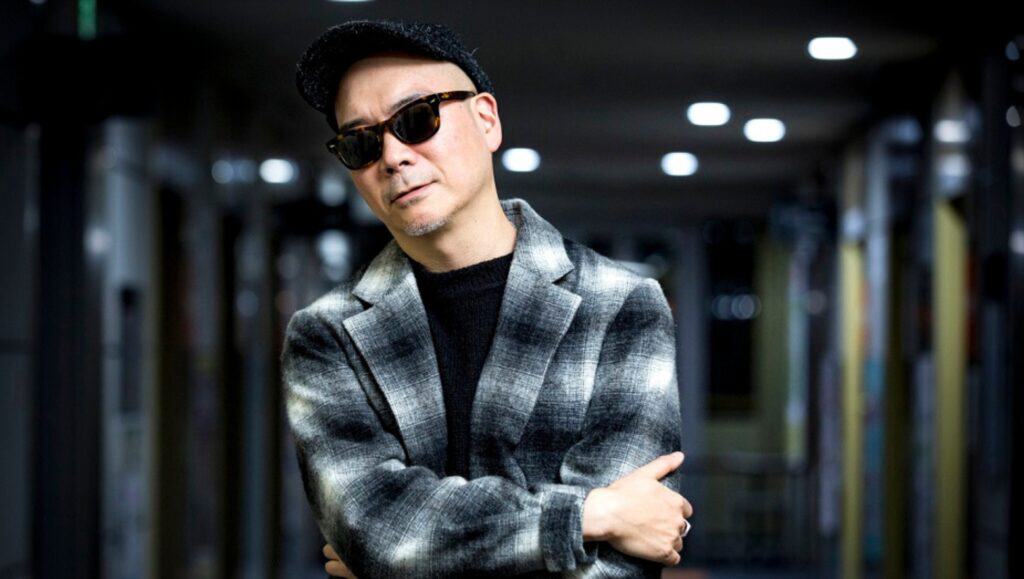
In January 2019, NORIKIYO put out O.S.D. ~Old School Discipline~, a stripped-down EP. Two months later came 平成エクスプレス (Heisei Express), his ninth solo album — fourteen tracks, dense lyricism, Sagamihara underground through and through. He records on weekdays because he has no other hobby. The music shows it.
Born in Sagamihara, Kanagawa — a city that rarely makes it onto cultural maps but one he has firmly placed on the Japanese hip-hop landscape — NORIKIYO has built one of the most consistent and uncompromising careers in the country’s rap scene. From his early days with the SD JUNKSTA collective, through his acclaimed 2011 album メランコリック現代 (Melancholic Gendai), to this remarkable creative surge at the close of the Heisei era, he has remained, above all else, himself.
For readers discovering you for the first time — how did you get into hip-hop?
Norikiyo: I started skating in 1994. The skate VHS tapes I watched back then featured tracks by groups like De La Soul — though I didn’t even know the word “hip-hop” yet. I knew “rap,” but not hip-hop. My middle school happened to be right next to a US military base, and I remember an American kid around my age setting me straight: “It’s called hip-hop.” From there, I started digging on my own and got completely hooked. A friend of mine was a serious breakdancer, so he taught me the moves. Then I watched the film Juice, and suddenly I wanted to be a DJ. I talked my little brother into buying me turntables with his savings — I told him, “Learn to DJ and the girls will love you.”
How did you first connect with the SD JUNKSTA crew — OJIBAH, BRON-K, WAX, DJ Isso, TKC? What’s happening with them now?
Norikiyo: BRON-K was actually a classmate of my younger brother. I knew his face — he was the guy with the shaved head, always sitting outside the convenience store in a football shirt, reading manga. Word got around that he could rap the entire Gin & Juice by Snoop Dogg in English, word for word. At that point, I had already moved from DJing to making beats on an MPC2000, so I told him, “If you can rap, come hang — and don’t forget to bring weed.” That’s how we got close. TKC was my own classmate. WAX was the same age as BRON-K; we used to go to clubs together and chase girls. I met OJIBAH at a live show in Shibuya, and we just clicked. DJ ISSO was from a different neighborhood, but he was a friend of KYN, another SD JUNKSTA member, and his scratching was on another level. I was already handling live DJ duties at our shows on top of everything else, so I asked him to take that role. That’s basically the whole story. It all started in our hometown of Sagamihara. Right now, I’m actually working on new material with OJIBAH and BRON-K.
See also: Norikiyo on Spotify / Official YouTube Channel

You’re widely considered one of the defining figures of Japanese rap. What do you make of that?
Norikiyo: I’m genuinely glad people feel that way, but honestly? I’m not at the top. And beyond that, I don’t think anyone is climbing the same mountain as anyone else. This isn’t a race to see who reaches the same summit first — everyone is climbing their own mountain. If you try to scale someone else’s peak, you’ll never beat the person who was already there. That’s just the nature of the game. I’m focused on building my own mountain higher. The day I feel like I’ve reached the top is the day the game is over for me. I still want to get better at rapping. I’m still searching for new ways to express myself, new ideas, new rhymes. That search will probably never end.
“Arigatou, Sayonara” — 2011 — deals with enormous themes in a simple title. What were you working through when you wrote it?
Norikiyo: 2011 was a year Japan will never forget. The Great East Japan Earthquake — a massive quake, a devastating tsunami, thousands of lives lost. The tsunami also destroyed a nuclear power plant. That disaster made me stop and appreciate things I had always taken for granted: clean water coming out of a tap, electricity at the flick of a switch. It felt like the Earth itself was furious at us. I thought: “The time has come to think not as Japanese, but as citizens of this planet.” Every nation’s history is marked by competition — over resources, over territory, over the sea. But while we fight over those things, the planet is breaking down. One day, it may become uninhabitable. Rather than attacking each other over grievances, what if we started by finding things to be grateful for and talking from that place? Maybe the world would start turning in a better direction. So I thought: before the day comes when we have to say goodbye to this planet, we should say thank you. That’s how I felt. I just turned it into a song. Of course, reality is harsh. But if music and art won’t speak to that, what will? A rapper dealing drugs on the street might represent one kind of reality. But seen from a planetary scale, this is what’s real. I’m not on the street anymore, and I’m not young anymore. That song was the reality of a man in his thirties — a human being on this Earth.
Baka to Hasami, O.S.D., Heisei Express — three albums in quick succession. Where does that energy and inspiration come from?
Norikiyo: I genuinely don’t have any hobbies outside of making music. Everyone else is at work during the week — my friends included. Nobody’s free to hang out on a weekday afternoon when you’re not a student anymore. So I go to the studio and enjoy making new tracks. The fact that it also happens to be my job — I’m grateful for that.
Of your nine albums, which would you recommend a French listener start with?
Norikiyo: I’m always most in love with whatever I’ve just made. What’s freshest out of the recording booth feels the most alive to me — so everything that’s already been released already feels old to me, in a way. That said, listen however you like. But starting with the newest work and working backward toward the older stuff might actually be interesting — you’d get a clear sense of how far I’ve come. I was pretty reckless when I was young. But then again, aren’t we all? Doesn’t matter if you’re Japanese or French — we’re all just people on the same planet. I want us to grow together.
Heisei Express dropped in early March. Looking back at it now, what goes through your mind?
Norikiyo: Every time I finish a record, I love it. But by the time it’s actually out, I’ve already started thinking, “I could have done that better,” or “I could have been more lyrical there.” Every single time. Once it’s out, you can’t go back into the booth and redo it. So the only thing left is to make new music and make up for it.
“Nan da Sorya?” — what were you saying with that one?
Norikiyo: Sadly, Japan is full of people who do nothing but imitate whatever style is trending. Most of them just want to be Travis Scott. Which is kind of funny, right? In a game that’s supposed to be about originality. When you’ve survived in this game for over a decade, you learn to spot it: “Oh, he’s just copying so-and-so.” It’s boring. For beginners, fair enough — everyone starts somewhere, and hunger is a good thing when you’re young. But the real question is: what are you leaving behind? Not talking about money. I’m saying that when you look back on it years from now, you’re the one who’ll feel embarrassed. Nobody can become someone else by imitating them — that’s obvious. Nobody was saying it out loud, so I did.
Now that the latest album is out, do you already have a vision for what comes next?
Norikiyo: Not yet. I’ve emptied every drawer I have. Right now, there’s nothing left. Once the tour is done, I’ll start thinking about it.
Five Japanese rappers you’d recommend right now?
Norikiyo: I’ll leave out the bilingual artists like AKLO — impressive as they are — and go with: Han’nya, MACCHO (OZROSAURUS), ZORN, GOTTZ, and Kvi Baba. Oh, and I almost forgot C.O.S.A. What they all have in common is the way they handle the Japanese language — the sonics of it, the flow. It’s not borrowed from English phrasing. It’s a Japanese flow. There’s a word for it: iki — a certain elegance, a certain edge. I respect other rappers, too, but the ones I truly look up to, you could count on two hands. I didn’t include him because he’s family, but BRON-K is an absolute must.
Do you think hip-hop has the potential to truly take root in Japan on a mainstream scale?
Norikiyo: As a listener, what makes me happy is seeing young artists I actually think are cool filling big stages. Not the watered-down hip-hop imitations — those acts disappear quickly. BAD HOP, for example — they’re seriously cool. I think the day they transcend Hood Star status and become genuine Rap Stars in Japan is coming soon. If I were younger, I’d be a full-on fan. Actually, I already am. The artists getting the spotlight right now carry a heavy weight on their shoulders — the pressure is real. The only way forward is to take that seriously and keep pushing. As for me, I do what I can at my own scale. Everyone — grab a mic and a pen over a calculator, and create something worth remembering.
Any final words to close out the interview?
Norikiyo: Thank you for reading to the end! I’ve never been to Europe. I don’t speak French or English — but I can’t wait to see you all someday. World peace.

Charlu: “I feel like I can finally stand at the starting line!”

5Leaf: “Each experience shapes the artist I become”
HAIIRO DE ROSSI: “Hip-Hop Is Not a Trend”
rice water Groove: “Classicism isn’t nostalgia. It’s a foundation to rebuild”

NENE: “My music reflects my life, my thoughts and my experiences”