February 5, 2018 | Tokyo, Japan | by ATTANGO
Japanese rap wrote its own history in the 1990s, and most of it never crossed the Pacific. The best Japanese rap albums of that decade came from a handful of crews who turned a borrowed American form, between 1991 and 2000, into something Japan could claim as its own. Scha Dara Parr put satire on record and landed a Nintendo tie-in. King Giddra brought politics and a New York education. Buddha Brand came home from Queens with a harder sound. Rhymester built the technical rules that Japanese MCs still follow three decades later. These groups did not join a scene that already existed. They built it, record by record, while the music press looked the other way.
Their hardest problem was the language itself. English drops into rap cadences without effort. Japanese resists: its syllables carry equal weight, its sentences end on verbs, and its pitch accent pulls against the backbeat. The MCs of the 90s worked this out in the studio, take after take, bending word order and stretching vowels until a line landed on the beat. You can hear the solutions they found in every Japanese verse recorded since.
The work paid off beyond the underground. Several of these records reached the charts, one sold more than a million copies, and rappers working today still quote them line for line. To map the decade we went back through the J-rap catalogue between 1991 and 2000. Thirteen albums kept surfacing as the best of the era. Here they are, in order of release, with what each one changed.
1991 · SCHA DARA PARR – Towering Nonsense
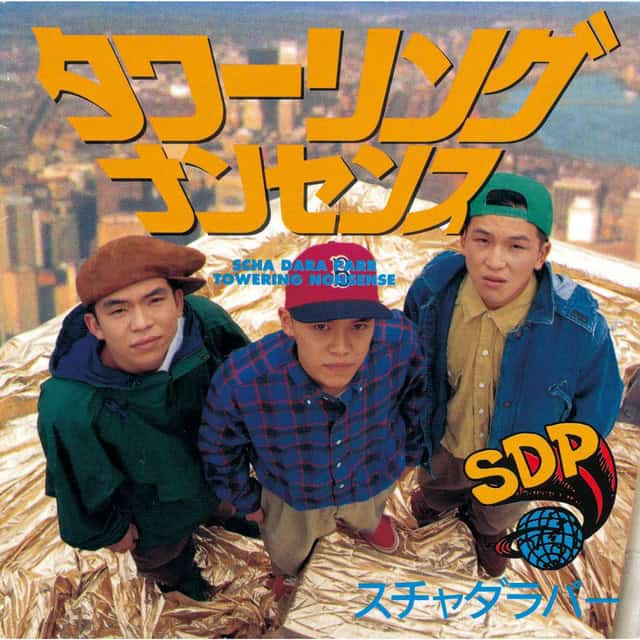
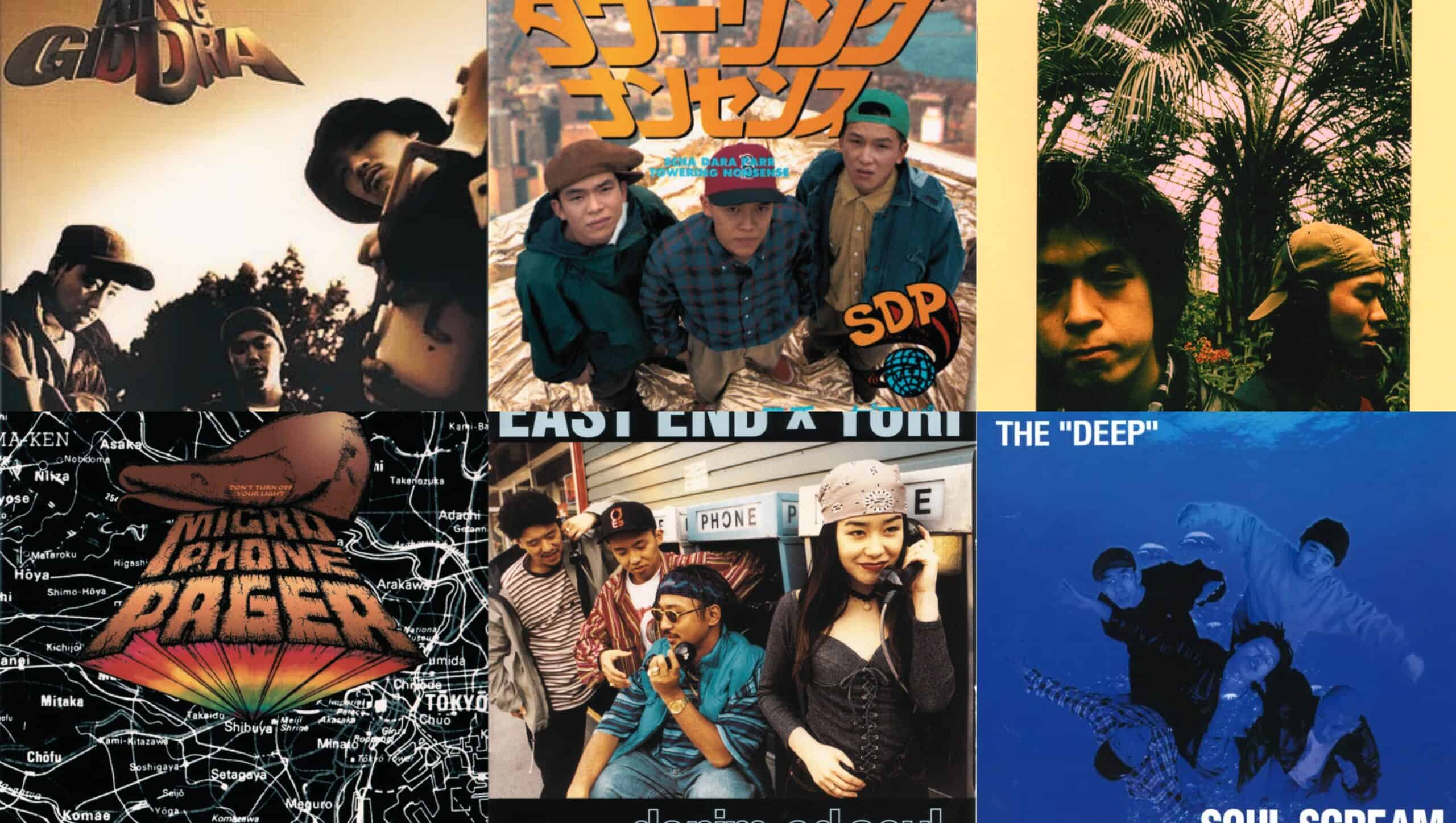
MCs Ani and Bose formed Scha Dara Parr with DJ Shinco in the late 1980s, while Japanese rap still lived in a handful of Tokyo clubs. Almost nobody outside those rooms had heard it. Their debut, Towering Nonsense, changed that in 1991. The record’s calling card was “Game Boy“, which ran in television commercials and attached itself to a special edition of Nintendo’s The Legend of Zelda. A rap track was suddenly playing in living rooms across Japan. The group took its structure from Run DMC but not its posture. Ani and Bose wrote jokes. They mocked themselves, their scene and the whole idea of Japanese men rapping, which put them closer to the Beastie Boys than to anything coming out of New York at the time. That angle made them listenable to people who would have switched off a harder record. Their audience grew through the decade. In 1995 their fifth album, 5th Wheel 2 the Coach, carried “Konya wa Boogie Back” and “Summer Jam ’95”, two tracks Japanese radio still plays. Towering Nonsense came first, though, and it did the harder job. It showed a Japanese audience that rap in their own language could work.
1994 · EAST END × YURI – denim-ed soul EP
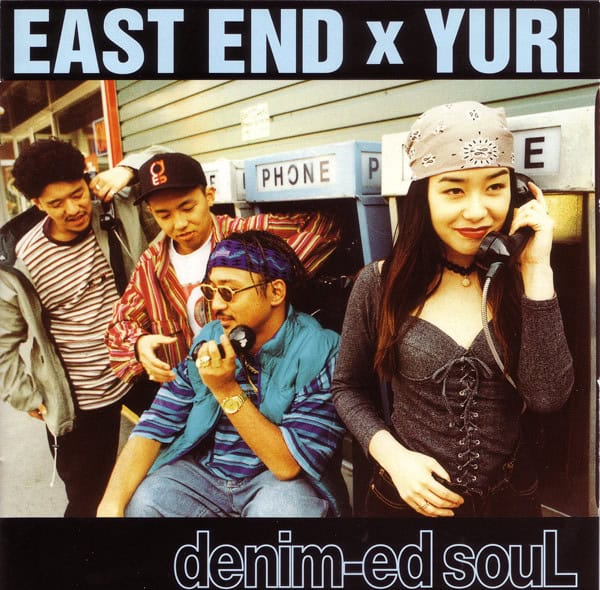
In the early 1990s Japanese rap sat well outside the mainstream. Then in 1994 the trio EAST END (Gaku, Yoggy and Rock-Tee) recorded with Yuri Ichii, a singer from the idol group Tokyo Performance Doll. Their single “DA-YO-NE” became a national hit and caught its own creators off guard. EAST END had doubted the idea. Yuri came from the idol circuit, about as far from hip-hop as Japanese pop got, and the members expected the pairing to read as a gimmick. She proved them wrong in the booth. More to the point, her presence carried the record to listeners who had never given rap a minute of their time. “DA-YO-NE” landed on the denim-ed soul EP in 1995. The EP sold more than a million copies, a first for a Japanese rap release, and it settled a question the industry had been asking: hip-hop could sit at the top of the charts next to J-pop. What EAST END × YURI proved went past the sales figures. A Japanese rap record could cross into the mainstream without shedding what made it rap. A generation of artists took that as permission and started working with urban sounds of their own. Three decades on, “DA-YO-NE” still turns up wherever Japanese rap gets discussed, remembered for its hook and for the door it opened.
1994 · DJ KRUSH – Strictly Turntablized
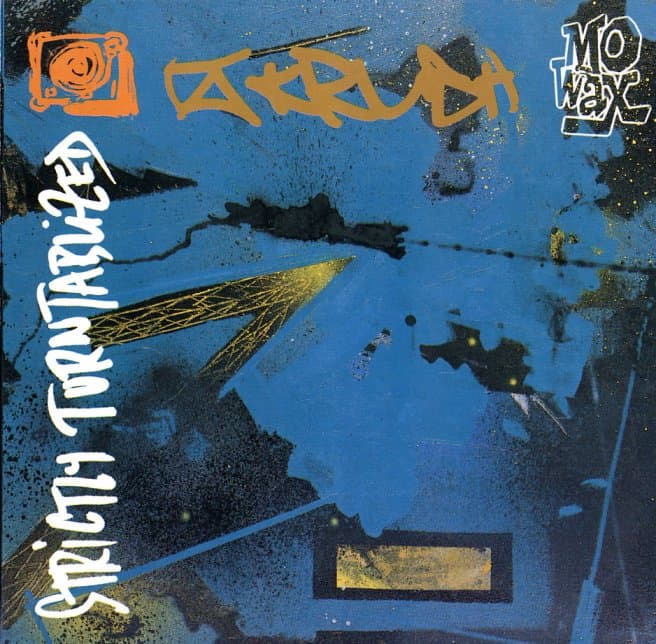
Before he went solo, DJ Krush ran with Krush Posse alongside Muro and DJ Go. The crew’s first release, K.P., appeared in 1990 on the compilation Yellow Rapculture In Your House. Japanese hip-hop had barely found its feet, and Krush Posse spent those years welding American rap onto local funk. “Chain Gang” and “Wagamama“, both with Monday Michiru singing, got them noticed. The group broke up before they ever finished an album. Krush put out two records in 1994, and Strictly Turntablized was the one that mattered. No MC, no vocals, nothing across the whole album but instrumentals and scratches. He built it from cuts, layered rhythms and the kind of boom bap that puts the turntable where the singer usually stands. Producers abroad heard it. Strictly Turntablized turned into a reference point for instrumental hip-hop, and the abstract beat scene that grew through the late 1990s traces a line back to it. When the album came out internationally the following year, Krush found an audience well outside Japan, which no Japanese producer had managed before him. He had shown that the next move in the genre could come from Tokyo.
1995 · RHYMESTER – Egotopia
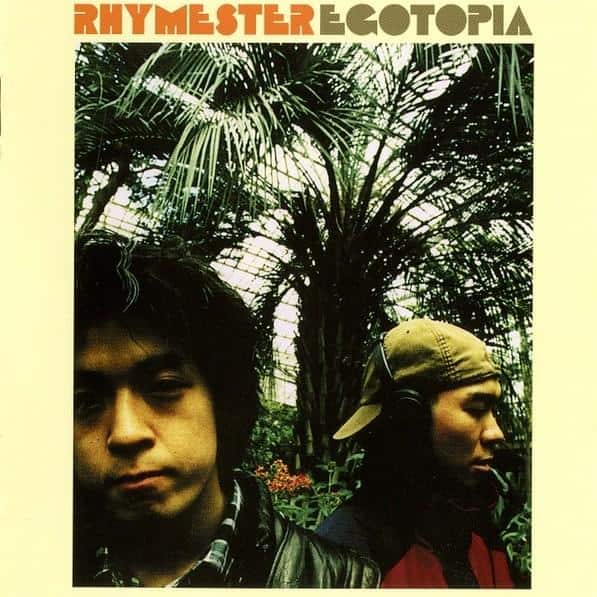
The Japanese underground of the mid-1990s pulled in two directions. Some musicians went toward punk, others toward the hip-hop that was gathering speed. Mummy-D and Utamaru had formed Rhymester in 1989 with bigger plans than most. Their 1993 debut sold badly. They kept going. DJ Jin joined in 1994 and completed the lineup. Egotopia followed in 1995, and the Japanese scene has agreed on it ever since: their best album, and one of the records that shaped everything after. The trio listened hard to A Tribe Called Quest, Mobb Deep, Jeru the Damaja and The Roots, then built something out of Tokyo rather than a copy of Queens. Dense sampling, stacked beats, lyrics with an argument in them. The influences matter less than the execution. Mummy-D and Utamaru cut samples in ways nobody in Japan had tried, laid them over bass lines with real weight, and kept the rhythms complicated enough to study and loose enough to dance to. The album works even if you speak no Japanese. Egotopia settled an argument. Japanese rappers could make records that stood next to American ones without pretending to be American. Every generation since has gone back to it, and anyone tracing the roots of Japanese rap starts here.
1995 · MICROPHONE PAGER – Don’t Turn Off Your Light
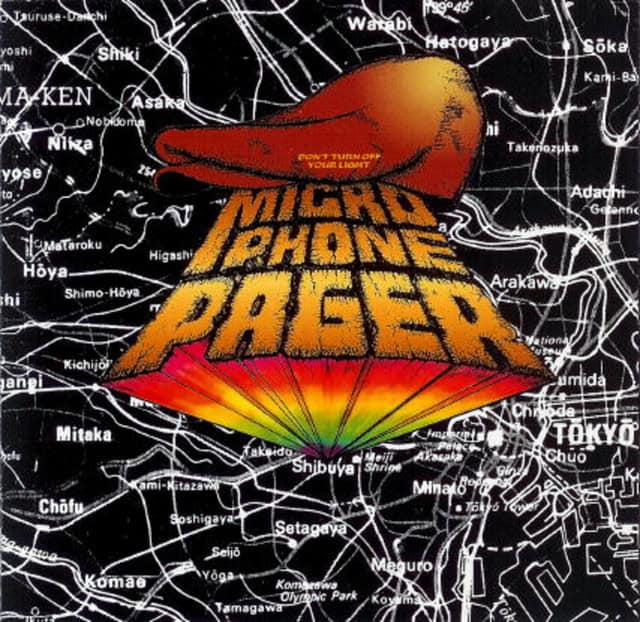
Muro, PH Fron Masao, DJ Go and Twigy started Microphone Pager in 1992 and built the hardest sound in Japanese hip-hop at the time. The lineup shrank to Muro and Twigy, and in 1995 the two of them made Don’t Turn Off Your Light. Japanese hip-hop was still rough in those years, still underground, still taking most of its cues from the New York East Coast. Microphone Pager leaned into that roughness rather than smoothing it out. Socially loaded rhymes, flows that changed direction mid-bar, beats that hit hard. Tokyo’s scene put them at its centre within a couple of years. The album turns on two tracks. “Rapperz Are Danger” is the one people quote. “Yamu Machi” (病む街) is the one that sticks: beatmaker Maki The Magic took the melody from Shamek Farrah’s “First Impressions” and rebuilt it into something darker than the original. American producer Stretch Armstrong worked on the project too, rare for a Japanese record in 1995, and it did nothing to dilute what the duo were doing. Don’t Turn Off Your Light raised the bar on two fronts at once, writing and production, and the MCs coming up behind them had to meet it. Ask a Japanese rapper today where the hardcore lineage starts and Microphone Pager comes up.
1995 · KING GIDDRA – Sora kara no chikara
https://www.youtube.com/watch?v=aexes_Iz_fY
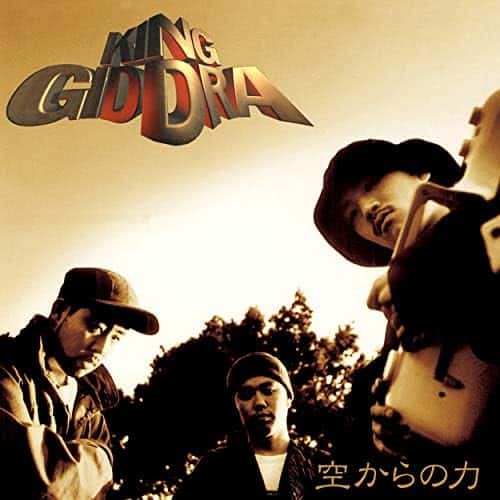
K DUB SHINE, Zeebra and DJ Oasis formed King Giddra in 1993, and conscious rap in Japan starts with them. Both Zeebra and K DUB SHINE had lived in the United States. They came back with the sound and with the politics attached to it, convinced Japan needed the same thing. Sora Kara no Chikara (“Strength from the Sky“, 1995) landed into a scene that mostly worked on style or copied an American template. King Giddra used the form to argue: youth unemployment, what the media was doing to people, consumer culture, violence. Nobody in Japanese rap had written that way before. The music came straight out of Public Enemy. Hard beats, sharp samples, no polish. The instrumentals sat in American boom bap while every word stayed in Japanese, which is what made the record land at home. A Tokyo listener got a sound they already recognised, carrying arguments about their own country. That combination gave Japanese rap a reason to exist beyond entertainment, and it set the template every politically minded Japanese MC has worked from since. Zeebra went on to become the most visible rapper in the country, but the case he and K DUB SHINE made here came first.
1995 · LAMP EYE – Shōgen (証言)
Few records from the 1990s Japanese underground still get played the way “Shōgen” (証言) does. LAMP EYE released it in 1995 and the scene changed shape around it. It was never one artist’s track. LAMP EYE worked as a banner for a group of MCs, and “Shōgen” runs like a cipher put to tape, each rapper taking a verse and pushing the next one harder. They wrote about urban poverty, discrimination, violence and the parts of Japanese society that mainstream music of the period stepped around. That frankness is what carried it. Young listeners heard their own lives in the verses. Everyone else heard things they would rather not have. Neither group could ignore the record once it was out. The style did as much work as the content. Aggressive flows, beats with no light in them, and no attempt to soften the delivery for anyone. MCs coming up in the late 1990s and through the 2000s took “Shōgen” as proof that Japanese rap could be a place to make an argument rather than a place to perform.
1996 · BUDDHA BRAND – Ningen Hatsudenjo
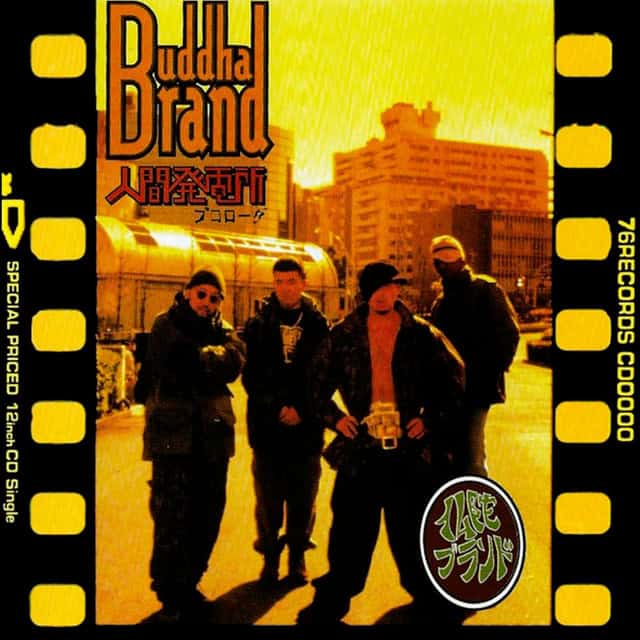
Buddha Brand started in New York, not Tokyo. MCs Dev Large, Nipps and CQ met DJ Masterkey there in 1988 and began recording together two years later, working out a bilingual style that belonged to nobody else. By the time they came home to Japan in 1995 they had spent years inside the New York underground, and you can hear every one of those years on the record they made next. Ningen Hatsudenjo (人間発電所, “The Human Power Plant“) came out in 1996. The lyrics switch between English and Japanese mid-verse, which nobody else was pulling off at the time, and the EP moves between hardcore punchlines, wordplay and flat description of things as they were. The flows give the group away instantly: sharp, certain, carrying mid-decade New York in every bar. DJ Masterkey handled production. Heavy drums, clean samples, and the underground atmosphere held from the first track to the last. The EP landed immediately. It made Buddha Brand the group everyone else measured themselves against, and it proved that a Japanese crew could cut a record that held up anywhere without losing where it came from. Dev Large died in 2015. The music has not aged, and Ningen Hatsudenjo still sits near the base of everything Japanese rap built afterwards.
1996 · SOUL SCREAM – The Deep
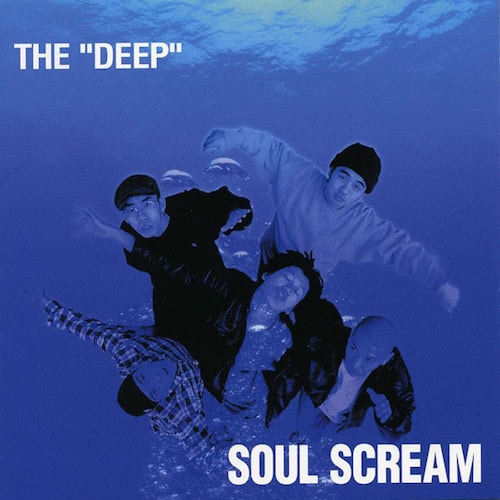
Hab I Scream, DJ Celory, ALG, Shiki and E.G.G. Man formed Soul Scream in 1994 and sounded nothing like the rest of the scene. The Deep arrived in July 1996, at a point when Japanese rap ran on hardcore flows and political argument. Soul Scream slowed down instead. They wrote about the city, then cut in images from outside it: weather, seasons, open ground. The beats move rather than hit. Nobody else in Japanese rap at that moment was making a record you could sit still with, and The Deep remains the calmest album on this list by some distance. You can trace the New York boom bap underneath it. The group read that lineage through a Japanese ear, keeping the structure and dropping the aggression, and the samples stay quiet enough to let the writing carry the weight. Positive Gravity followed in 1999 and settled their reputation. The single “Hachi to Chō” (蜂と蝶, “The Bee and the Butterfly“) picked up radio play outside Japan, which almost no Japanese rap record managed in the 1990s. Soul Scream showed the scene a second way to work: you could rap about the same streets without raising your voice.
1998 · BY PHAR THE DOPEST – Lastrum
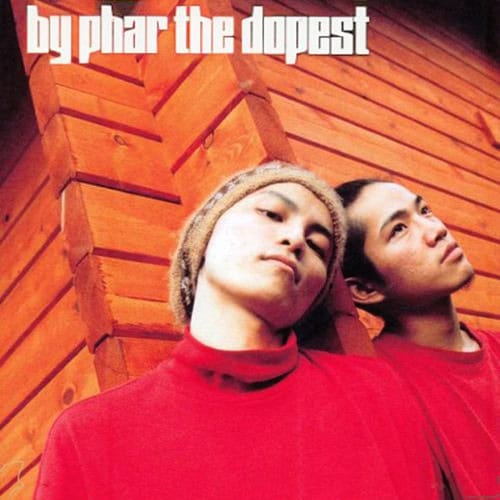
Kreva and Cuezero grew up together in Edogawa-ku, east Tokyo, and formed By Phar the Dopest out of that friendship. The two of them could rap, plainly and obviously, with a looseness and a knack for wordplay that the 1990s scene noticed fast. Their first single, “Trump Card“, came out in 1997 and went straight through the Japanese underground. Two MCs, precise writing, no wasted energy, and a boom bap that owed nothing to anyone’s marketing department. People started watching to see where they would go next. Lastrum followed in 1998 and answered the question. Thick beats, lyrics with something at stake, the whole golden-age playbook rebuilt in Japanese rather than borrowed from it. The album put the duo among the most influential groups of the late decade, and listeners outside Japan found it years after the fact. Kreva went on to a solo career that made him a household name at home. The writing that got him there shows up here first, already finished.
1998 · ZEEBRA – The Rhyme Animal
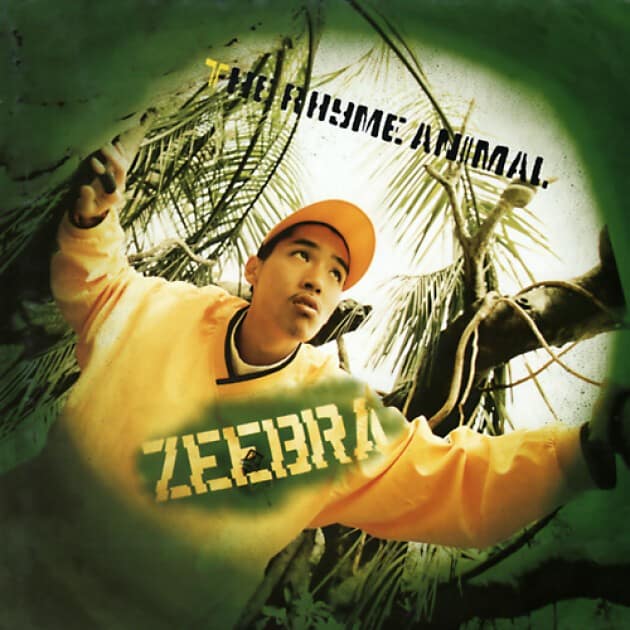
Zeebra came out of King Giddra with a reputation already built, then spent his solo career pushing the same argument harder. He writes about money, work and what Japan offers people in their twenties, and by the end of the 1990s a lot of young listeners had decided he spoke for them. He took the title of his first solo album from Chuck D of Public Enemy, the rapper he had modelled himself on. The Rhyme Animal arrived in 1998, self-produced from start to finish, and the production holds up whether or not you follow a word of the Japanese. The track list carries “Mirai e No Kagi” (未来への鍵), “I’m Still N1“, “Tokyo No Chuo” (東京の中央), “Party Checka” and “Original Rhyme Animal“. Not many people bought it at the time. Japanese hip-hop was still small in 1998, and the album found its audience slowly, over years, until rappers who were children when it came out started naming it as the reason they began. Zeebra used the record to put Japan’s social arithmetic in front of listeners who had never heard it framed that way.
2000 · M-FLO – Planet Shining
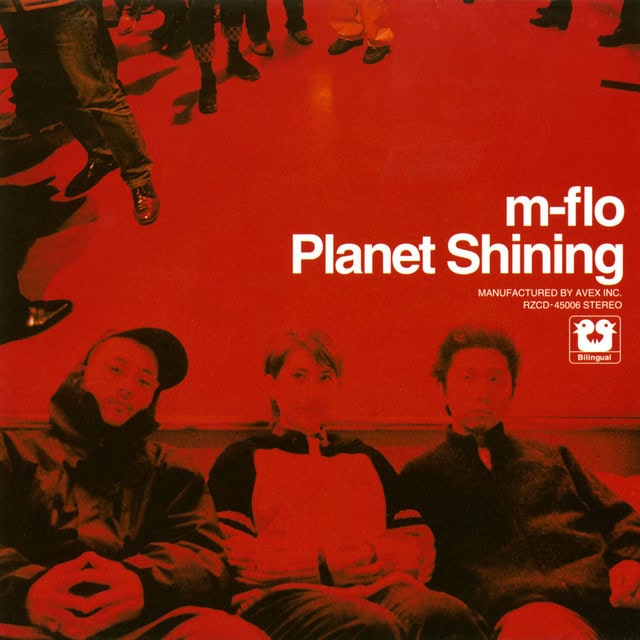
m-flo put out The Tripod EP in July 1999: MC Verbal, DJ Taku Takahashi and the singer Lisa, pairing “Flo Jack” with a reissue of “Been So Long“. The industry noticed within weeks. Six more singles followed over the next months, each selling better than the last, and by the time the album was announced people were waiting for it. Planet Shining came out in 2000 and reached number 6 on the Oricon chart, which no Japanese rap group had managed by folding R&B into the music the way these three did. It sold across Asia. The record works because the three of them pull in different directions and the arrangements still hold. Lisa sings soul. Verbal raps hard against it. Taku builds the tracks out of electronics rather than samples, which made the whole thing sound like the decade starting rather than the one ending. “Been So Long” is the way in, with a chorus built to stay put. After Planet Shining, a Japanese rap record could carry R&B and electronics without anyone treating it as a betrayal.
2000 · NITRO MICROPHONE UNDERGROUND – Nitro Microphone Underground
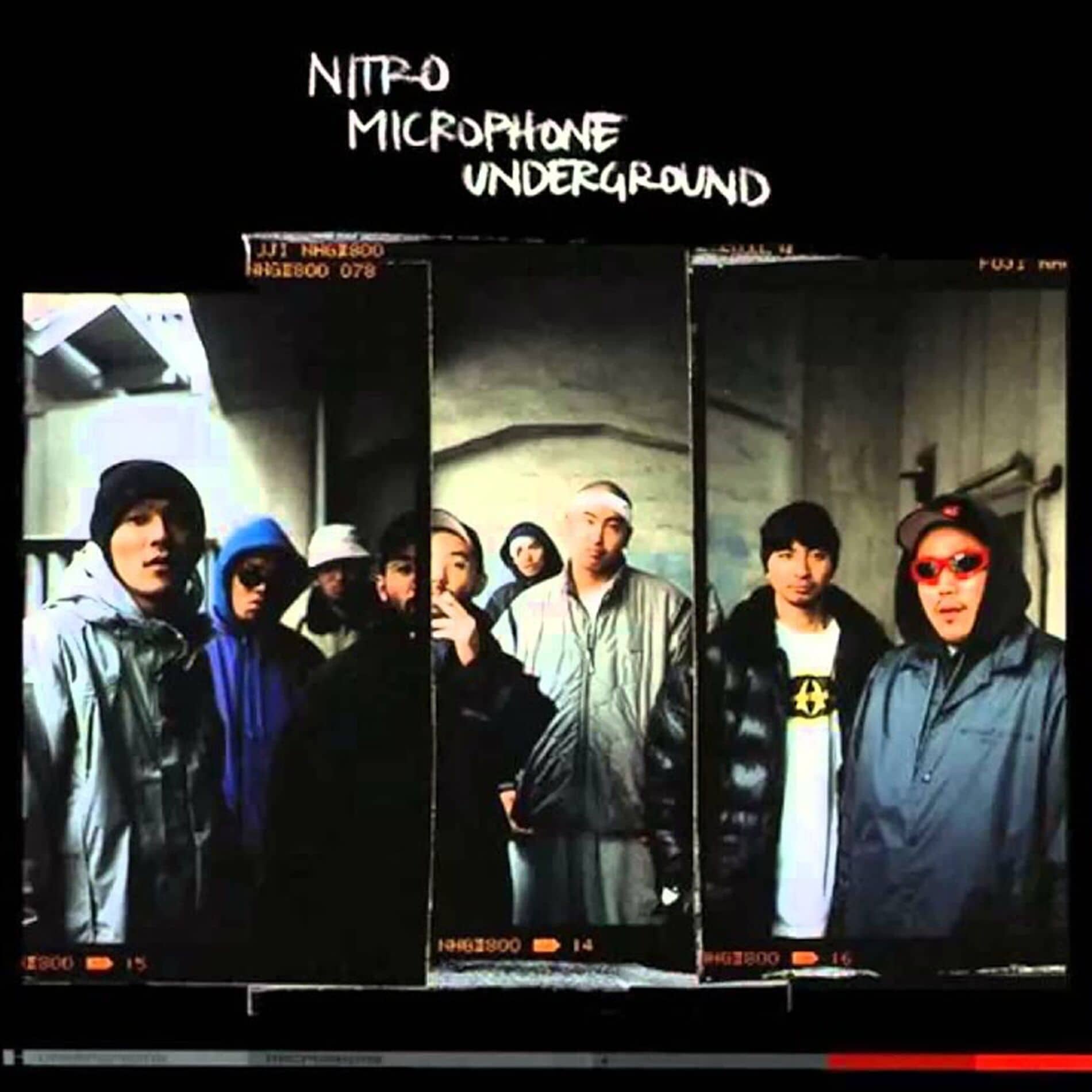
People called Nitro Microphone Underground the Japanese Wu-Tang Clan, and the comparison holds up better than most. Eight MCs: Gore-Tex, Deli, Bigzam, XBS, Suiken, Dabo, Macka-Chin and S-Word. Each of them raps differently, and the records work because nobody sanded down the differences. Nitro Works, their first EP, came out in 1999 and the Japanese press and the underground agreed on it at once. The self-titled album followed the next year and sold tens of thousands of copies, which for hardcore Japanese rap in 2000 was a great deal. The style is rough on purpose. Sharp boom bap underneath, eight MCs taking turns above it, and no chorus written to get anyone onto the radio. Underground listeners took to it immediately and the group never had to adjust a thing. Their live shows built the rest of the reputation: eight people on a stage, no let-up, and an audience that knew every verse. All eight went on to solo careers, which carried the crew’s influence further than the group records alone would have. Japanese rappers starting out today still work through this album, and listeners abroad who find Japanese hip-hop usually arrive here early.
HARKA & Gam Ball drop new single “MVP”
Only U, MIKADO & Hezron release “Squad shit”
Andre & NAOtheLAIZA Release One-Take EP Genesis
Sadboiterra & Arevos Drop “Letter,” First Single – Project SVART -EP-
Red Eye Drops “Nothing Holds Me Down” Featuring NORIKIYО