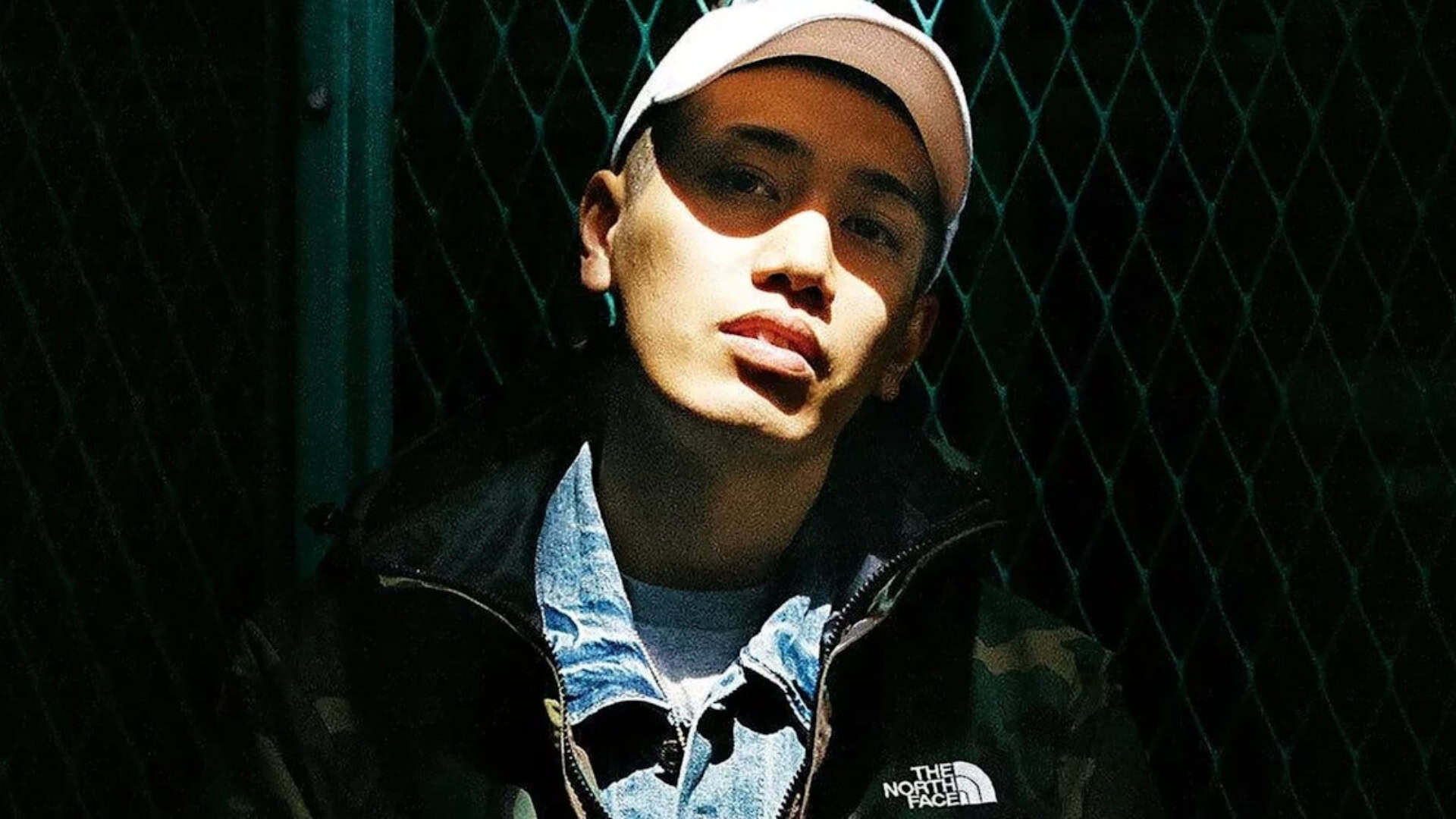
Kawasaki, 1989. That’s where JJJ was born, in an industrial city on Tokyo’s doorstep that has produced several key names in contemporary Japanese rap. A rapper, producer, and DJ, he built a body of work over a decade and a half that stands among the most personal in Japan’s hip-hop scene.
Starting out in Kawasaki with Fla$hBackS
His name surfaced in February 2013 as part of Fla$hBackS, a group he formed with Febb, a.k.a Young Mason, and KID FRESINO. Their debut album, FL$8KS, marked their entry into the scene and laid the groundwork for a sound: boom-bap rebuilt from raw samples, with each member already carving out his own voice. JJJ brought a loose, free-associative flow to the group, drawing as much from jazz as from New York classicism in the vein of Common. In November 2014, he released Yacht Club, his first solo album. The Alchemist’s influence is clear in the psychedelic sample choices and unapologetic lo-fi feel. JJJ said at the time he wrote his beats for himself first, without worrying about leaving room for anyone to rap over them.
HIKARI arrived in February 2017 and changed things. The album topped several year-end best-of lists and won the Apple Vinegar Music Award, presented by Masafumi Gotoh of ASIAN KUNG-FU GENERATION, who singled out “HPN” for capturing human sadness with a rare economy of means in Japanese rap. Between 2019 and 2021, JJJ slowed his solo output (singles “flame,” “loops,” “STRAND” with KEIJU, “Cyberpunk” with Benjazzy) while ramping up production work for other artists, including Daichi Yamamoto, STUTS, and PUNPEE. “Cyberpunk” marked a sharp break from his early boom-bap, moving toward darker electronic production shaped by New York drill and UK grime.
MAKTUB, his third solo album, released in 2023, brought this whole trajectory together. The record leans into Afropop, house and grime influences while reuniting his longtime collaborators: Febb, STUTS, DJ Scratch Nice, Daichi Yamamoto, Campanella. Closing track “Beautiful Mind” reunites Fla$hBackS a decade after their debut.
Beyond his solo catalog, JJJ built a parallel career as a sought-after producer. He produced Daichi Yamamoto’s entire Radiant album (2024), extending a collaboration that started back in 2016 with “She“. He also worked with PUNPEE on “Step Into The Arena” (2022) and produced music for Japanese ad campaigns, a space few underground rappers move into so comfortably. In January 2024, the single “Kids Return” dropped with little fanfare. No one knew at the time that it would be his last release during his lifetime. That same year, JJJ sold out the Hibiya Park Large Music Hall, nicknamed “Noon” by fans, within minutes, for the biggest solo show of his career.
jjj dies suddenly in 2025
On April 8, 2025, JJJ announced a tour called “The Light.” Five days later, on April 13, he died at 35. His label, Space Shower Music, confirmed the news the following day. The cause of death was not disclosed, and his family held a private funeral, asking fans mourning JJJ to listen to his music rather than speculate. Few artists managed to hold together an unapologetic classicism, jazz samples, boom-bap, crate-digging culture, with a constant pull toward new territory. His influence runs through a whole generation of rappers and producers who passed through Fla$hBackS or were influenced by his production work: KID FRESINO, C.O.S.A., Daichi Yamamoto, Campanella. JJJ now counts over 180,000 monthly listeners on Spotify, a number that has kept climbing since April 2025. His catalog remains available on every platform, carried by tracks like “Eye Splice,” “STRAND”, and “Beautiful Mind.”
Now listen to our playlists on Spotify!
Updated every two weeks