April 2, 2026 | Tokyo, Japan | by ATTANGO
Hip hop in Japan is mainstream now. Awich fills arenas, POP YOURS sells out in minutes, and rap sits on the Oricon charts next to J-pop. None of that was true in 1990. The decade between those two points is where it happened.
American hip hop spent the 80s turning into a serious cultural force. Grandmaster Flash, Run-DMC and Public Enemy built the form. It reached Japan through a handful of people who flew to New York and came back with records. We covered them in a previous piece: Hiroshi Fujiwara (藤原ヒロシ), Toshio Nakanishi (中西 俊夫) and DJ Yutaka (ディージェイ・ユタカ) found the culture around 1982 and carried it home. All three were still working through the 90s.
What followed was not a straight import. Ito Seiko (いとう せいこう) and Chikida Haruo, who recorded as President BPM, rebuilt rap technique around the Japanese language instead of forcing English patterns onto it. Young fans had events to hold onto: the WILD STYLE TOUR in 1983, with the cast of Charlie Ahearn’s film, then RUN-DMC live in 1986. The MAJOR FORCE label gave local artists somewhere to release, starting with Tiny Panx, Scha Dara Parr (スチャダラパー), ECD, The Orchids, Tycoon To$h and Terminator Troops.
This article covers the 90s: the rappers who defined the decade, the Sanpin CAMP (さんぴんCAMP) and B-BOY Park festivals, and the first radio and television shows to treat hip hop as a subject worth airtime.
Is Rap Popular in Japan?
Yes, and the shift is recent. For most of the 90s and 2000s, hip hop in Japan lived in clubs, specialist record shops and a handful of late-night radio slots. It sold steadily and it never led.
That has changed. Rap albums chart next to J-pop, POP YOURS has grown into the country’s largest hip hop festival, and artists like Awich headline rooms no Japanese rapper could have filled twenty years ago. Brands sign rappers. Television advertising uses the music without treating it as a novelty.
What has not changed is where any of it came from. The rules today’s artists work inside were written in the 90s, by people playing to a few hundred listeners at a time. The rest of this article is about those people.
Japanese Rap and the Language Problem
Japanese rap started small in the 80s and grew into one of the most inventive scenes in Asia. The pioneers brought the culture over. The 90s generation had to make it work in Japanese. Ito Seiko and Chikida Haruo watched what the United States was doing and rebuilt the technique rather than copying it.
The hardest part was the language itself. English rhyme is flexible. Japanese sentences end on verbs, which drops the same handful of endings at the close of every line and kills the rhyme before it starts. The first and second generations of MCs worked around it. They clipped verbs, leaned on accented syllables, and dropped English words in where a line needed a different sound. That last choice carried meaning too, tying the music back to Black American hip hop while the writing stayed Japanese.
The result broke with Japanese poetic tradition, which counts syllables rather than rhyming. More amateur rappers turned up once they could hear how it was done. A constraint that looked like a dead end produced a style nobody else had.
The workarounds became the style. Clipping a verb to land a rhyme changes the register of a sentence, so the writing had to carry that shift rather than hide it. Borrowing an English word for its sound rather than its meaning did the same. Two generations of MCs argued about how far to push either move, and the argument produced most of what is distinctive about the way Japanese rap sounds.
Yellow Rap Culture In Your House: The Compilation That Set the Scene
Three albums between 1988 and 1990 put rap on solid ground for the second generation. Two came out on MAJOR FORCE: Pico Curie by ECD in 1989, then Operation Scha Dara Parr by Scha Dara Parr the following year. The third arrived in 1990 on Wax Plate Records, a twelve-inch compilation called “Yellow Rap Culture In Your House“. It carried four singles: “Do Da Do“, “K.P“, “Now Iz When We Must Decide” and “Let’s Gathering“. Krush Posse, which was DJ Krush‘s first group with DJ GO and Muro, sat alongside Gutch Dee, Home Boys and Honey Bomb. The scene called it the most important rap record Japan had made.
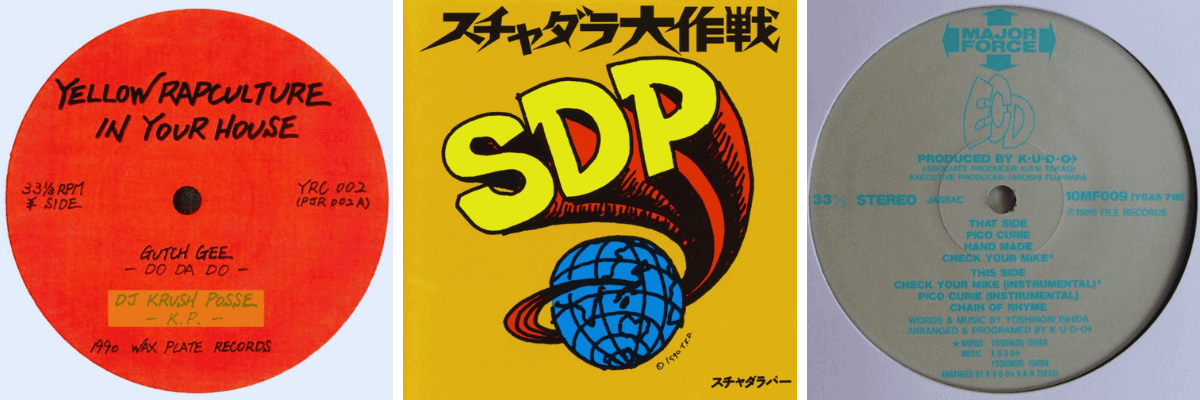
Yellow Rap Culture in Your House, Operation Scha Dara Parr, Pico Curie
That record set the terms for the decade. The sounds and the techniques on it gave the next wave something to work from, and the wave arrived fast: RHYMESTER, MICROPHONE PAGER, BUDDHA BRAND, LAMP EYE, SOUL SCREAM, SHAKKAZOMBIE, KIMIDORI, GAGLE. Between them they wrote the songs people still play: “口から出まかせ” by Rhymester, “Hachi To Cho” by Soul Scream, “Rapperz Are Danger” by Microphone Pager, “虹” by Shakkazombie, “Summer Jam 95” by Scha Dara Parr, “Shogen” by Lamp Eye and “Ningen Hatsudensho” by Buddha Brand.
DA.YO.NE by EAST END x YURI: Japanese Rap’s First Million Seller
1994 is the year rap reached the general public. EAST END x YURI released “DA.YO.NE.“, radio took it, and the scene started arguing about what that meant. EAST END were already known: Gaku, Yoggy and Rock-Tee, three friends from school. Yuri Ishii came from the idol group Tokyo Performance Doll, and the pairing worked from the first session. The track went on the “Denim-ed Soul” EP, built over the melody from George Benson’s “Turn Your Love Around“.
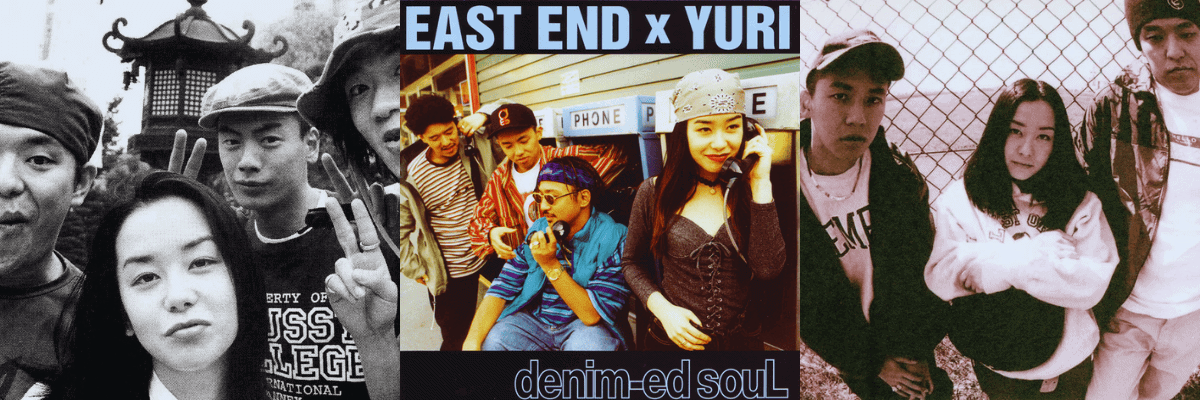
EAST END X YURI, Denim-ed Soul
The lyrics are what made it travel. No sex, no drugs, no alcohol, none of the social argument other rappers were making. “DA.YO.NE” is about friends and a crush, and that is why it reached people who had never bought a rap record. It became the first Japanese rap single to sell a million copies, and the group went from known to famous in weeks. Purists took it badly. They read the pop production as a move away from what the music was for, and said so loudly.
Sanpin CAMP, Riko Sakurai and B-BOY Park: Hip Hop in Japan Goes Public
Sanpin CAMP (さんぴんキャンプ) happened on 7 July 1996 at the Hibiya Open Air Concert Hall, and it is the day hip hop in Japan stopped being underground. ECD put it together and got the scene’s biggest names onto one stage: YOU THE ROCK★, ECD himself, RHYMESTER, MICROPHONE PAGER, LAMP EYE, SOUL SCREAM, SHAKKAZOMBIE and MURO. Nothing on that scale had happened before.
The bill matters as much as the date. Putting YOU THE ROCK★, RHYMESTER, MICROPHONE PAGER, LAMP EYE and MURO on one stage told an audience that had followed these acts separately that they belonged to the same thing. Recordings of the show circulated for years afterwards, and rappers who were teenagers in the crowd cite it as the reason they started.
Some coverage already existed. YOU THE ROCK★ started his radio show “Hip Hop Night Flight” in 1995, and the magazine FRONT put out its first hip hop issue in 1994. Sanpin CAMP is where the press caught up, and where rappers began treating promotion as part of the work.
The year after brought new labels and new shows. “HIP HOP JOURNEY DA CYPHER” ran on J-WAVE radio and MTV JAM on NHK, both hosted by Riko Sakurai. She gave Japanese rappers and DJs airtime for their sets, put American stars on the same programmes, and kept at it for years. No journalist in Japan had committed to hip hop that way before her.
B-BOY Park was the other fixture, at Yoyogi Park every year from 1997, started by Crazy-A and DJ Yutaka. It ran for two decades. It was never only rap on a stage: there were dance battles, MC battles and DJ battles, and the crowd came for all of it. Newer artists used it to get seen, and the people who came up there carried the 80s and 90s influences into the 2000s.
Japanese rap covered a lot of ground between the early 80s and the end of the 90s. A handful of people, a few records and two festivals turned an import into a scene with its own rules. Everything since, up to the arenas Awich plays now, runs back through that decade.
Artists · Interviews · Videos
BONUS VIDEO
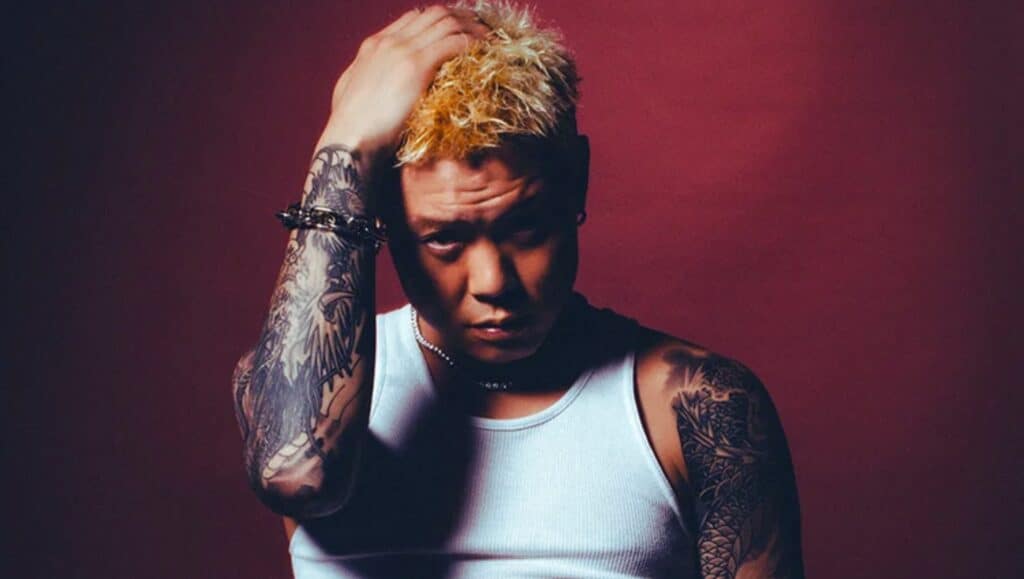
22 Japanese Rappers to Know in 2026
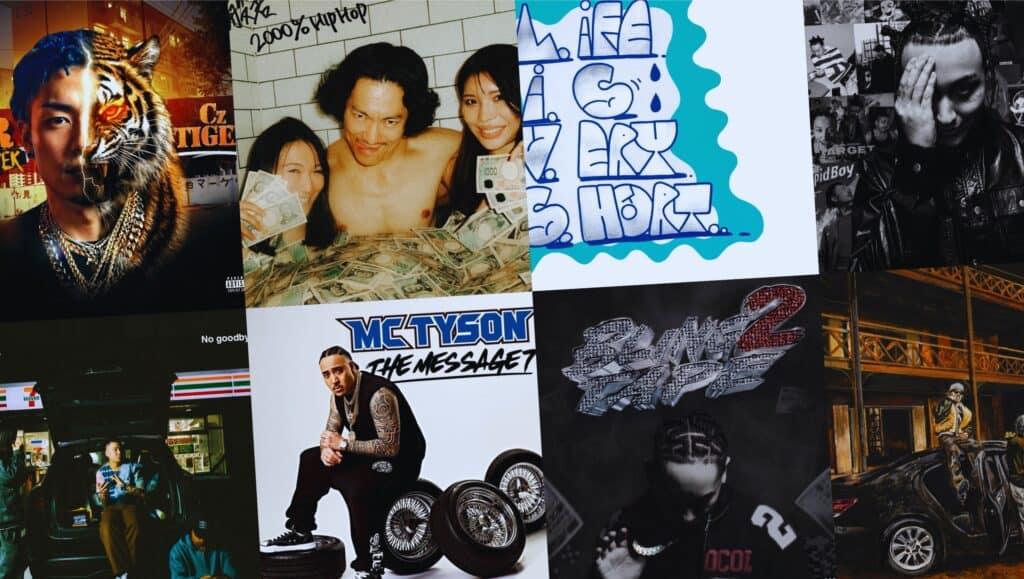
Best Japanese Hip Hop Albums of 2026 – Vol. 2
Hip-Hop and Anime: Where Japanese Culture Meets Rap
10 Best Japanese Rap Albums of the 2000s
Best Japanese Hip Hop Albums of 2026 – Vol. 1